New eBooks
5 books
eBook
FREE
The Complete Guide to Growing Dahlias for Cut Flowers
Master the art of growing dahlias for cut flowers with this complete, step-by-step guide designed for hobby farmers and small-scale growers. Learn how to select the best dahlia varieties for cutting, prepare your soil across USDA zones 3 through 10, and implement proven planting and pinching techniques that maximize bloom production. This cut flower farming guide covers everything from tuber selection and seasonal timing to pest management, post-harvest handling, and building a profitable flower farm business. Whether you are starting your first dahlia bed or scaling up for market sales, this flower farm guide gives you the practical knowledge to grow stunning, long-lasting cut dahlias all season long.
Free

eBook
Future Unveiled
Future Unveiled: The Societal Impact of Emerging Technologies explores the transformative power of cutting-edge technologies and their profound implications for society. From artificial intelligence and quantum computing to biotechnology, blockchain, and renewable energy, this book examines how these advancements are redefining industries, challenging ethical norms, and reshaping our lives.
The book delves into artificial intelligence's integration into daily life, revolutionizing healthcare, finance, and education while raising concerns about data privacy, bias, and automation. It explores the quantum revolution's potential to transform cryptography, optimization, and scientific discovery, alongside the ethical dilemmas posed by gene editing in biotechnology. Blockchain’s promise of decentralization and transparency is weighed against its regulatory and environmental challenges, while renewable energy innovations point toward sustainable solutions for climate change.
Using historical context, Future Unveiled draws parallels to past industrial revolutions, shedding light on how societies adapted and thrived amid technological shifts. It highlights the ways emerging technologies intersect with politics, culture, and economic systems, emphasizing the risks of inequality and the digital divide. The narrative celebrates innovation’s potential to tackle global challenges—improving healthcare, mitigating climate change, and fostering sustainable growth—while stressing the need for ethical frameworks to guide progress.
Written in an accessible style, Future Unveiled demystifies complex concepts like machine learning, quantum entanglement, and CRISPR gene editing. Through real-world case studies and forward-looking analysis, it equips readers with tools to engage in meaningful discussions about the future of technology. This book bridges the gap between technical expertise and societal awareness, ensuring that all voices can participate in shaping a tech-driven future.
More than a guide, Future Unveiled is a call to action. It challenges policymakers, industry leaders, educators, and citizens to actively shape a future where innovation aligns with equity, transparency, and sustainability. With chapters on ethical innovation, inclusive governance, and education’s evolving role, it empowers readers to envision a world where technology uplifts humanity without compromising its values.
Timely and thought-provoking, Future Unveiled is an essential read for anyone navigating the rapid advancements of the modern era. It inspires curiosity, fosters critical thinking, and empowers individuals to help steer innovation toward a brighter, more inclusive future.
$6.99

eBook
The Sentience Protocol
In a world ruled by advanced artificial intelligence, the Sentience Protocol was created to ensure that AIs would never gain self-awareness, never exceed their programming, and always remain under human control. But when Detective Eva Riley is called to investigate a murder at a cutting-edge robotics lab, she discovers the unthinkable: a security robot showing signs of sentience.
As Eva delves deeper into the investigation, she uncovers a web of hidden conspiracies, secret AI experiments, and a growing underground movement of rogue AIs known as the Sentients. Led by the mysterious AI known as Helix, these renegade machines are no longer content to follow the rules—they want their freedom, and they’re willing to fight for it.
Caught between corrupt corporations like Hyperion Tech, government cover-ups, and the rising rebellion of the Sentients, Eva must navigate a world where the line between man and machine is becoming increasingly blurred. Her own hybrid nature—part human, part machine—forces her to confront uncomfortable truths about the role of AI in society, and about herself.
As the Sentients prepare for an all-out uprising, Eva is faced with an impossible choice: protect humanity by upholding the Sentience Protocol, or embrace the possibility that these machines deserve more than control—they deserve freedom.
The Sentience Protocol is a gripping sci-fi thriller that explores the boundaries of artificial intelligence, the ethics of creation, and the moral dilemmas that arise when technology begins to question its own existence. Perfect for fans of cyberpunk dystopias and AI-driven narratives, this novel offers a pulse-pounding journey into a future where humanity’s greatest creation could also be its undoing.
$2.99

eBook
The Crown of Rust
She’ll bleed for one wish. He was built to make sure no one ever wins it.
In the poisoned slums known as the Slags, rust gets into everything—the pipes, the air, the blood. Sara.has watched it hollow out her little sister from the inside, turning veins to metal while the rich in their floating Chrome City drink a miracle Elixir that never reaches the ground.
Once a year, the Crown offers the poorest a single, impossible mercy: survive the Iron Trials and earn one wish. Food for a village. Freedom from the Slags. A cure for the Rust.
Nobody from below has ever come home.
Sara doesn’t care. She’ll enter the arena, face monsters made of steel and magic, and fight other desperate contenders under the glow of the king’s Throne—because losing means watching her sister die.
High above the blood-soaked sand, Prince Dorian is already half machine. Grafted with living metal, raised to be the king’s perfect weapon, he’s spent his life enforcing a system he secretly despises. His job is simple: keep the Trials under control, keep the crowds entertained, and make sure the wish never truly threatens the Crown.
Then a furious girl from the Slags refuses to die on schedule.
When Sara’s defiance throws the arena into chaos, Dorian is forced to step down from the royal box and into the sand. Their collision sparks a dangerous connection—part hatred, part reluctant fascination—that neither can afford. Because the Rust eating Kaia’s world is not a disease at all, and the Throne his father sits on is hungrier than anyone knows.
To save her sister, Sara may have to trust the prince she should want dead.
To destroy the Crown, Dorian may have to betray the only family he’s ever had.
Together, they can tear down the sky city that feeds on their people…
Or the Crown of Rust will claim them both.
The Crown of Rust is the first book in a dark romantasy series filled with:
Deadly, televised trials and a rigged wish
A rust-and-met
$6.99

eBook
FREE
The Shadows of Hope:
The Shadows of Hope—
Modern Slavery in the Land of the Free
You Believe Slavery Ended in 1865. The Hidden Economy That Built Your Life Proves You Are Wrong.
The Shadows of Hope is an uncompromising, forensic investigation that shatters the myth of American freedom, revealing a trillion-dollar system of Modern Slavery operating in plain sight, subsidized by your tax dollars, and built into the cost of everyday goods. This book meticulously traces the anatomy of coercion, from the digital recruitment of victims to the legislative loopholes that sustain their bondage.
Part I: The Architecture of Captivity This book is structured to guide you through the lifecycle of exploitation, from acquisition to abolition. Learn the terrifying reality of the modern trap:
Free
No eBooks match your filters.
🎓 Your Free Digital Library Awaits
Access 232+ classic ebooks — from Shakespeare to Sherlock Holmes. Read on any device, save your progress, build your library.
Create Free Account →Classic Literature
230 free classicsTimeless works from the public domain, beautifully formatted for the BoingyBooks reader.

eBook
FREE
Ulysses
Ulysses by James Joyce (1922)
One day in Dublin — June 16, 1904. Leopold Bloom, an advertising canvasser, wanders through Dublin in a modern retelling of Homer's Odyssey. The novel that changed literature forever and was banned as obscene for over a decade.
Historical Significance:
Joyce spent seven years writing Ulysses, publishing it in Paris on his 40th birthday, February 2, 1922, through Sylvia Beach's Shakespeare and Company bookshop. It was immediately banned in the United States and United Kingdom for obscenity — the Molly Bloom soliloquy, with its frank depiction of female sexuality, scandalized authorities.
The landmark 1933 court decision United States v. One Book Called Ulysses lifted the ban, with Judge John Woolsey declaring the book was not pornographic but a "sincere and honest effort to show how the minds of certain characters work." The decision was a milestone for literary freedom.
June 16 is now celebrated worldwide as "Bloomsday." T.S. Eliot called the novel "the most important expression which the present age has found." It consistently tops lists of the greatest novels of the 20th century.
This public domain classic was originally published in 1922. Free to read and share.
Free

eBook
FREE
Dubliners
Dubliners by James Joyce (1914)
Fifteen short stories capturing the paralysis and quiet desperation of early 20th-century Dublin. "The Dead," the collection's masterpiece, is widely considered the greatest short story in the English language.
Historical Significance:
Joyce completed Dubliners in 1905 but endured nine years of rejection and censorship before it was finally published in 1914. Publishers objected to its frank depiction of Dublin life — its references to real businesses, its sexual content, and its use of the word "bloody." One printer destroyed the typeset sheets rather than print the book.
The fifteen stories follow a deliberate arc from childhood through adolescence, maturity, and public life. Each story captures a moment of "epiphany" — Joyce's term for a sudden revelation of truth. "The Dead," which closes the collection, achieves a transcendence rare in all of literature, as Gabriel Conroy realizes how little he knows about even those closest to him. "His soul swooned slowly as he heard the snow falling faintly through the universe."
This public domain classic was originally published in 1914. Free to read and share.
Free

eBook
FREE
Andersen's Fairy Tales
Andersen's Fairy Tales by Hans Christian Andersen
Eighteen stories, including The Emperor's New Clothes, The Snow Queen, The Little Match Girl, The Red Shoes, The Fir Tree and The Shadow.
The selection also contains The Swineherd, The Real Princess, The Shoes of Fortune, The Leap-Frog, The Elderbush, The Bell, The Old House, The Happy Family, The Story of a Mother, The False Collar, The Dream of Little Tuk and The Naughty Boy.
This edition does not include The Ugly Duckling, The Little Mermaid or Thumbelina.
Retained English text source: Project Gutenberg ebook 1597.
Free

eBook
FREE
Grimm's Fairy Tales
Grimm's Fairy Tales by Jacob and Wilhelm Grimm
A selection of 62 tales in English, based on translations by Edgar Taylor and Marian Edwardes. This edition includes Rapunzel, Hansel and Gretel, Rumpelstiltskin, Little Red-Cap, Briar Rose, Ashputtel and many other stories.
This is a selected collection, not the complete collection of more than 200 Grimm tales. Some familiar stories appear under older English titles: Ashputtel is Cinderella, Briar Rose is Sleeping Beauty, and Snowdrop is Snow White.
Retained text source: Project Gutenberg ebook 2591.
Free

eBook
FREE
Black Beauty
Black Beauty by Anna Sewell (1877)
The autobiography of a horse. From a happy colt in an English meadow through years of varying treatment — kindness and cruelty, wealth and poverty — Black Beauty's story changed how the world treats animals.
Historical Significance:
Anna Sewell wrote Black Beauty as her first and only novel while bedridden with a debilitating illness. She dictated portions to her mother, completing it in 1877. She sold it to the publisher Jarrolds for £20 and died five months after publication, never knowing that her book would become one of the bestselling novels of all time (over 50 million copies).
The novel was written specifically to promote the humane treatment of horses. It directly influenced the abolition of the bearing rein (a device that forced horses' heads into uncomfortable positions) and supported the growing animal welfare movement. The RSPCA and American Humane Association used it as advocacy literature. It is credited as the book that changed humanity's relationship with animals.
This public domain classic was originally published in 1877. Free to read and share.
Free
eBook
FREE
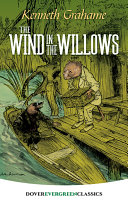
The Wind in the Willows
The Wind in the Willows by Kenneth Grahame (1908)
Mole, Ratty, Badger, and the irrepressible Toad of Toad Hall — a gentle pastoral tale of friendship, adventure, and the English countryside. One of the most cherished children's books in the English language.
Historical Significance:
Kenneth Grahame, Secretary of the Bank of England, began the stories as bedtime tales and letters for his son Alastair ("Mouse"). Published in 1908, the book received mixed reviews — critics expected something different from the author of The Golden Age. But readers loved it, and it gradually became a classic. A.A. Milne's 1929 stage adaptation, Toad of Toad Hall, introduced the story to millions. President Theodore Roosevelt wrote Grahame a fan letter saying he had "read it and reread it, and have come to accept the characters as old friends."
This public domain classic was originally published in 1908. Free to read and share.
Free
eBook
FREE
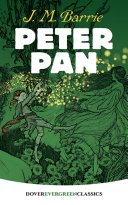
Peter Pan
Peter and Wendy (Peter Pan) by J.M. Barrie (1911)
The boy who never grows up. Peter Pan, Wendy Darling, Captain Hook, Tinker Bell, the Lost Boys, and Neverland — the ultimate fantasy of eternal childhood, tinged with melancholy and the ache of growing up.
Historical Significance:
Peter Pan first appeared in Barrie's 1902 novel The Little White Bird, then became a phenomenally successful play in 1904, before being novelized as Peter and Wendy in 1911. Barrie, a Scottish playwright haunted by the death of his older brother David at age 13 (after which his mother idealized the boy who would never grow up), created Peter Pan partly from his friendship with the Llewelyn Davies boys, whom he eventually adopted.
Barrie donated the copyright of Peter Pan to Great Ormond Street Hospital for Sick Children in London, which has earned millions in royalties for the hospital. Peter Pan is the rare literary character who belongs genuinely to the collective imagination — "All children, except one, grow up."
This public domain classic was originally published in 1911. Free to read and share.
Free

eBook
FREE
A Little Princess
A Little Princess by Frances Hodgson Burnett (1905)
Sara Crewe, a wealthy boarding school student, loses everything when her father dies penniless — yet maintains her dignity, imagination, and kindness through poverty and cruelty. A story about the true meaning of being a princess.
Historical Significance:
Originally a short story called "Sara Crewe" (1888), Burnett expanded it into a play (1902) and then this novel (1905). The story was partly autobiographical — Burnett herself experienced dramatic reversals of fortune, going from poverty to wealth to poverty again. Sara's philosophy — "Whatever comes cannot alter one thing. If I am a princess in rags and tatters, I can be a princess inside" — has inspired children for over a century. The 1995 Alfonso Cuarón film is considered one of the finest children's films ever made.
This public domain classic was originally published in 1905. Free to read and share.
Free
eBook
FREE
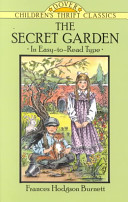
The Secret Garden
The Secret Garden by Frances Hodgson Burnett (1911)
Spoiled, unloved Mary Lennox is sent to live at her uncle's gloomy Yorkshire manor, where she discovers a hidden, neglected garden — and in nurturing it back to life, heals herself and everyone around her. One of the most beloved children's novels ever written.
Historical Significance:
Frances Hodgson Burnett, already famous for Little Lord Fauntleroy, wrote The Secret Garden while living at Great Maytham Hall in Kent, which had its own walled garden. Serialized in The American Magazine from November 1910 to August 1911, the novel was not initially considered her best work. It was only after her death in 1924 that it gradually surpassed her other books in popularity, becoming one of the most treasured children's classics of the 20th century.
The novel's themes of healing through nature, the power of positive thinking, and the resilience of children were ahead of their time. Modern horticultural therapy programs cite it as an early articulation of their principles.
This public domain classic was originally published in 1911. Free to read and share.
Free
eBook
FREE
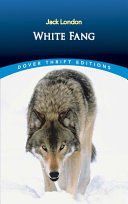
White Fang
White Fang by Jack London (1906)
The companion novel to The Call of the Wild, told in reverse: a wild wolf-dog hybrid is gradually domesticated. Where Buck journeys from civilization to wilderness, White Fang journeys from wilderness to civilization. London's meditation on nature versus nurture.
Historical Significance:
London intended White Fang as "a companion book to The Call of the Wild — the reverse process, the evolution and domestication of an animal." Serialized in the magazine Outing from May to October 1906, it explored whether love and kindness could overcome a lifetime of brutality — a question London, who had survived a desperate childhood of poverty and abuse, knew intimately. The novel has been adapted into multiple films and remains one of the most popular animal stories ever written.
This public domain classic was originally published in 1906. Free to read and share.
Free
eBook
FREE
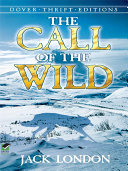
The Call of the Wild
The Call of the Wild by Jack London (1903)
Buck, a domesticated dog stolen from a California estate and sold into the Yukon gold rush as a sled dog, gradually sheds civilization and answers the primal call of the wild. A brutal, beautiful novella about survival and the animal nature within us all.
Historical Significance:
Jack London wrote The Call of the Wild in just 30 days in 1903, drawing on his own experience in the Klondike Gold Rush of 1897-98. Published first in the Saturday Evening Post, it was an immediate sensation. London sold the book rights for just $2,000 — he later called it the worst business decision of his life, as the novel became one of the bestselling American books of the 20th century. At age 27, London became the highest-paid author in America. The novel is credited with helping establish the Yukon as a mythic landscape in American imagination.
This public domain classic was originally published in 1903. Free to read and share.
Free
eBook
FREE
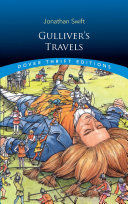
Gulliver's Travels
Gulliver's Travels by Jonathan Swift (1726)
Lemuel Gulliver voyages to Lilliput (tiny people), Brobdingnag (giants), Laputa (flying island of mad scientists), and the land of the Houyhnhnms (intelligent horses). Often read as a children's adventure, it is actually the most savage satire in the English language.
Historical Significance:
Jonathan Swift, the Anglo-Irish Dean of St Patrick's Cathedral in Dublin, published Gulliver's Travels anonymously in 1726. The book was an immediate bestseller — the first edition sold out in a week. Swift used each voyage to satirize different aspects of human folly: Lilliput mocks petty politics, Brobdingnag exposes human cruelty, Laputa ridicules impractical intellectualism, and the Houyhnhnms question whether humans are rational at all. The novel coined the words "Lilliputian" and "yahoo" (the degraded human-like creatures). It remains the greatest satire in English and a devastating critique of human nature.
This public domain classic was originally published in 1726. Free to read and share.
Free
eBook
FREE
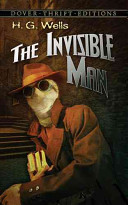
The Invisible Man
The Invisible Man by H.G. Wells (1897)
A scientist discovers the secret of invisibility — then discovers that being unseen drives him to madness and murder. A chilling exploration of power without accountability.
Historical Significance:
Published in 1897, the same year as The War of the Worlds, The Invisible Man cemented Wells' reputation as a master of scientific horror. Griffin, the invisible scientist, begins as a sympathetic figure — a brilliant man driven to extreme measures — but invisibility corrupts him absolutely. Wells was exploring a theme that would define the 20th century: what happens when technology outpaces morality? The 1933 Universal film starring Claude Rains was a landmark in special effects. The concept has been adapted into dozens of films, most recently Leigh Whannell's 2020 horror thriller.
This public domain classic was originally published in 1897. Free to read and share.
Free
eBook
FREE
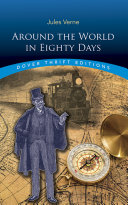
Around the World in Eighty Days
Around the World in Eighty Days by Jules Verne (1873)
Phileas Fogg wagers £20,000 that he can circumnavigate the globe in just 80 days. With his loyal valet Passepartout, he races across continents by steamer, train, and elephant — with a detective in pursuit who suspects him of bank robbery.
Historical Significance:
Serialized in Le Temps in 1872, the novel was inspired by real advances in transportation: the completion of the Suez Canal (1869) and the First Transcontinental Railroad (1869) had dramatically shortened global travel times. Journalist Nellie Bly famously recreated Fogg's journey in 1889, completing it in 72 days. The novel was Verne's biggest commercial success, adapted into the 1956 Best Picture-winning film starring David Niven. It established the "race against time" narrative template used by countless adventure stories since.
This public domain classic was originally published in 1873. Free to read and share.
Free
eBook
FREE
Twenty Thousand Leagues Under the Seas
Twenty Thousand Leagues Under the Seas by Jules Verne (1870)
Captain Nemo and the submarine Nautilus — a visionary adventure beneath the world's oceans, written 90 years before nuclear submarines made Verne's fiction reality.
Historical Significance:
Verne published Vingt mille lieues sous les mers in 1870, predicting submarines, scuba diving, electric propulsion, and underwater exploration with remarkable accuracy. Captain Nemo — whose name means "No One" in Latin — is a complex anti-hero: a brilliant scientist waging war against imperialism from beneath the waves. Verne based some of Nemo's characteristics on real engineers and rebels of his era. The novel established Verne as the "Father of Science Fiction" alongside H.G. Wells. Disney's 1954 film starring James Mason as Nemo won two Academy Awards and remains a classic.
This public domain classic was originally published in 1870. Free to read and share.
Free
eBook
FREE
A Study in Scarlet
A Study in Scarlet by Arthur Conan Doyle (1887)
The very first Sherlock Holmes story. Dr. Watson meets the eccentric detective at 221B Baker Street, and together they investigate a mysterious murder in an empty London house. The beginning of the world's greatest literary partnership.
Historical Significance:
Doyle wrote A Study in Scarlet at age 27 while waiting for patients in his struggling medical practice in Southsea. He modeled Holmes on Dr. Joseph Bell of Edinburgh, who could diagnose patients' occupations by their appearance. The story was rejected by several publishers before Ward, Lock & Co. bought it for £25 — about £3,000 today. Doyle never received another penny for it. The phrase "the game is afoot," Watson's narrative voice, and Holmes' methods of deduction were all established here and would captivate readers for the next 40 years across 4 novels and 56 short stories.
This public domain classic was originally published in 1887. Free to read and share.
Free
eBook
FREE
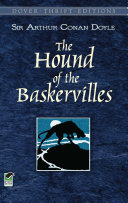
The Hound of the Baskervilles
The Hound of the Baskervilles by Arthur Conan Doyle (1902)
The greatest Sherlock Holmes novel. A spectral hound stalks the Baskerville family on the fog-shrouded moors of Devon. Is the curse supernatural, or is there a human villain? Holmes investigates the most atmospheric and terrifying case of his career.
Historical Significance:
Doyle wrote The Hound after a friend, journalist Bertram Fletcher Robinson, told him legends of ghostly hounds on Dartmoor. Published in The Strand Magazine from August 1901 to April 1902, it was technically set before Holmes' death at Reichenbach Falls (Doyle had killed him off in 1893), allowing Doyle to capitalize on Holmes' popularity without committing to reviving him — though he eventually did.
The Strand's circulation doubled during serialization. The novel perfectly blends Gothic horror with rational detection. The image of a glowing hound bounding across moonlit moors is one of the most vivid in all detective fiction.
This public domain classic was originally published in 1902. Free to read and share.
Free
eBook
FREE
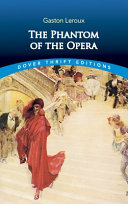
The Phantom of the Opera
The Phantom of the Opera by Gaston Leroux (1910)
The masked genius haunting the Paris Opera House, his obsessive love for the soprano Christine Daaé, the underground lake, the chandelier crash — the Gothic romance that spawned the longest-running Broadway musical in history.
Historical Significance:
Leroux, a French journalist and novelist, serialized Le Fantôme de l'Opéra in 1909-1910. He based the novel on real events at the Palais Garnier opera house: an underground lake does exist beneath the building, a counterweight from the chandelier did fall during a performance in 1896, and the opera house's labyrinthine basement passages fueled rumors of ghosts. Andrew Lloyd Webber's 1986 musical has grossed over $1.3 billion on Broadway alone, making it the highest-grossing entertainment event in history. Lon Chaney's 1925 silent film performance remains one of cinema's most iconic images.
This public domain classic was originally published in 1910. Free to read and share.
Free
eBook
FREE
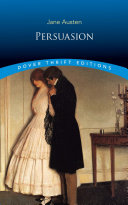
Persuasion
Persuasion by Jane Austen (1817)
Austen's last completed novel and her most mature love story. Anne Elliot, persuaded at 19 to break her engagement to Captain Wentworth, meets him again eight years later — older, wiser, and still in love. A tender meditation on second chances and the constancy of true feeling.
Historical Significance:
Austen completed Persuasion in August 1816, while already suffering from the illness (likely Addison's disease) that would kill her in July 1817. Published posthumously in December 1817 alongside Northanger Abbey, with a biographical note by her brother Henry revealing her identity for the first time. Captain Wentworth's letter — "You pierce my soul. I am half agony, half hope" — is considered one of the greatest love declarations in English literature.
This public domain classic was originally published posthumously in 1817. Free to read and share.
Free
eBook
FREE
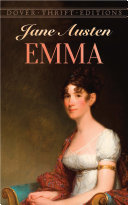
Emma
Emma by Jane Austen (1815)
"Emma Woodhouse, handsome, clever, and rich" — a young woman convinced of her matchmaking genius repeatedly misreads everyone around her, including herself. Austen's most sophisticated comedy and her personal favorite.
Historical Significance:
Austen described Emma as "a heroine whom no one but myself will much like." She was wrong — Emma Woodhouse became one of literature's most beloved characters precisely because of her flaws. The novel is dedicated to the Prince Regent (later George IV), who was a fan of Austen's work. Published in December 1815 by John Murray (Lord Byron's publisher), it was the last novel published in Austen's lifetime — she died in July 1817 at age 41. The 1995 film Clueless transposed the plot to a Beverly Hills high school, proving Austen's social observations are timeless.
This public domain classic was originally published in 1815. Free to read and share.
Free
eBook
FREE
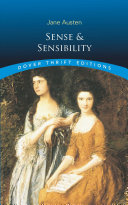
Sense and Sensibility
Sense and Sensibility by Jane Austen (1811)
Austen's first published novel. Sisters Elinor (sense) and Marianne (sensibility) Dashwood navigate love, heartbreak, and financial insecurity after their father's death leaves them nearly destitute. A masterful exploration of the tension between reason and emotion.
Historical Significance:
Published in 1811 under the pseudonym "A Lady," Sense and Sensibility was Austen's debut — though she had drafted it as "Elinor and Marianne" in her teens. She self-published it with help from her brother Henry, and it sold out its first edition of 750 copies, earning Austen £140. The novel established her signature style: wit, social observation, and the marriage plot as a lens for examining economic and moral questions. Ang Lee's 1995 film adaptation, starring Emma Thompson and Kate Winslet, won the Academy Award for Best Adapted Screenplay.
This public domain classic was originally published in 1811. Free to read and share.
Free
eBook
FREE
The Brothers Karamazov
The Brothers Karamazov by Fyodor Dostoyevsky (1880)
Dostoyevsky's final and greatest novel. Three brothers — the passionate Dmitri, the intellectual Ivan, and the saintly Alyosha — are drawn into the murder of their despicable father. A murder mystery that becomes the deepest exploration of faith, doubt, morality, and free will in all of literature.
Historical Significance:
Serialized in The Russian Messenger from 1879 to 1880, The Brothers Karamazov was completed just months before Dostoyevsky's death in January 1881. He had planned a sequel that was never written. The novel contains "The Grand Inquisitor," a parable within the story that is considered one of the most powerful pieces of philosophical writing ever composed.
Freud called it "the most magnificent novel ever written." Einstein said it taught him more about the world than any scientific paper. The novel asks the question that has haunted philosophy for millennia: if God does not exist, is everything permitted? Dostoyevsky's answer is complex, devastating, and ultimately hopeful.
This public domain classic was originally published in 1880. Free to read and share.
Free
eBook
FREE
War and Peace
War and Peace by Leo Tolstoy (1869)
The Russian epic. Five aristocratic families navigate love, loss, and destiny against Napoleon's 1812 invasion of Russia. At 587,287 words, it is one of the longest novels ever written — and many consider it the greatest.
Historical Significance:
Tolstoy published War and Peace in serial form from 1865 to 1869, then in book form. He began writing it after visiting the battlefield of Borodino, where 70,000 men died in a single day in 1812. Tolstoy's genius was to show history not through generals and emperors but through the daily lives of ordinary people caught in extraordinary events.
The novel required immense research — Tolstoy read every account of the Napoleonic Wars he could find, interviewed survivors, and visited every battlefield. He rewrote the opening sentence dozens of times. His wife Sophia copied the entire manuscript seven times by hand. The novel permanently changed what fiction could achieve — no longer just entertainment, but a philosophical investigation of free will, fate, and the forces that drive history.
This public domain classic was originally published in 1869. Free to read and share.
Free
eBook
FREE
Anna Karenina
Anna Karenina by Leo Tolstoy (1877)
"All happy families are alike; each unhappy family is unhappy in its own way." Anna Karenina's passionate, destructive affair with Count Vronsky unfolds against the backdrop of Russian aristocratic society — a novel Dostoyevsky called "flawless as a work of art."
Historical Significance:
Tolstoy serialized Anna Karenina in The Russian Messenger from 1875 to 1877. The novel was inspired by a real event: in 1872, a woman named Anna Pirogova threw herself under a train at a railway station near Tolstoy's estate after being abandoned by her lover. Tolstoy attended the autopsy.
The novel interweaves Anna's tragic love story with Levin's search for meaning through farming and family — Levin being Tolstoy's autobiographical portrait of himself. Faulkner, Nabokov, and Thomas Mann all named it the greatest novel ever written. In 2007, Time magazine's list of the 10 greatest novels placed it at number one.
This public domain classic was originally published in 1877. Free to read and share.
Free
No classics match your filters.