New eBooks
0 booksNo eBooks Yet
Be the first to publish an eBook on BoingyBooks!
🎓 Your Free Digital Library Awaits
Access 232+ classic ebooks — from Shakespeare to Sherlock Holmes. Read on any device, save your progress, build your library.
Create Free Account →Classic Literature
6 free classicsTimeless works from the public domain, beautifully formatted for the BoingyBooks reader.
eBook
FREE
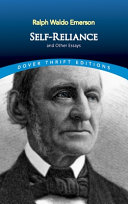
Self-Reliance and Other Essays
Self-Reliance and Other Essays by Ralph Waldo Emerson (1841)
"Trust thyself: every heart vibrates to that iron string." "A foolish consistency is the hobgoblin of little minds." "To be great is to be misunderstood." The most quoted American essayist — every sentence a proverb.
Historical Significance:
Ralph Waldo Emerson published his first series of Essays in 1841, establishing himself as the intellectual leader of American Transcendentalism and one of the most influential thinkers in American history. "Self-Reliance" — his most famous essay — argues for nonconformity, individual integrity, and trusting one's own intuition over social pressure. Emerson influenced Thoreau, Whitman, Dickinson, Nietzsche, William James, and every subsequent American writer and thinker who valued individualism. His Divinity School Address (1838), in which he challenged organized Christianity, got him banned from Harvard for 30 years. Obama, Jobs, and countless leaders have cited Emerson as foundational.
This public domain classic was originally published in 1841. Free to read and share.
Free
eBook
FREE
A Room of One's Own
A Room of One's Own by Virginia Woolf (1929)
"A woman must have money and a room of her own if she is to write fiction." Woolf's extended essay on women and literature — arguing that women's absence from the literary canon is not due to lack of talent but lack of opportunity.
Historical Significance:
Based on two lectures Woolf delivered at Cambridge in October 1928, A Room of One's Own was published in 1929 and became the foundational text of feminist literary criticism. Woolf imagined "Shakespeare's sister" — a woman equally talented who would have been married off, mocked, and driven to suicide. The essay argues that economic independence and physical space are prerequisites for creative work — a seemingly simple observation that had revolutionary implications. It influenced Simone de Beauvoir, Betty Friedan, and every subsequent feminist thinker. The title has become shorthand for women's need for independence and creative autonomy.
This public domain classic was originally published in 1929. Free to read and share.
Free

eBook
FREE
The Essays of Montaigne
The Essays of Michel de Montaigne (1580-1592)
"Que sais-je?" — "What do I know?" Montaigne invented the essay form: short, personal, digressive explorations of everything from cannibals to kidney stones, from death to the education of children.
Historical Significance:
Michel de Montaigne, a French nobleman who retired to his château's tower library in 1571, spent the rest of his life writing Essais — literally "attempts" or "trials." Published in three volumes (1580, 1588, 1595), the Essays invented a new literary form: the personal essay, in which the author's own experience and self-observation become the primary subject. Montaigne's radical skepticism, his tolerance, his curiosity about other cultures (he was one of the first Europeans to write sympathetically about indigenous peoples), and his unflinching self-examination made him the first truly modern writer. Shakespeare read him; Emerson worshipped him; every essayist since writes in his shadow.
This public domain classic was originally published 1580-1592. Free to read and share.
Free

eBook
FREE
Civil Disobedience
Civil Disobedience by Henry David Thoreau (1849)
"That government is best which governs least." Thoreau's essay on the moral duty to resist unjust government — written after spending a night in jail for refusing to pay a poll tax in protest of slavery and the Mexican-American War.
Historical Significance:
Originally published as "Resistance to Civil Government" in 1849, this short essay became one of the most influential political texts in world history. Thoreau argued that individuals have a moral obligation to disobey unjust laws, even at personal cost. Mahatma Gandhi read it in a South African prison and credited it as a major inspiration for his campaign of nonviolent resistance. Martin Luther King Jr. read it as a student at Morehouse College and later wrote that it was his "first intellectual contact with the theory of nonviolent resistance." The essay has influenced every major civil rights and protest movement since.
This public domain classic was originally published in 1849. Free to read and share.
Free

eBook
FREE
Walden and Civil Disobedience
Walden and Civil Disobedience by Henry David Thoreau
This combined edition contains Walden, Thoreau's account of life beside Walden Pond, followed by the separate essay On the Duty of Civil Disobedience.
Walden explores daily work, the natural world, solitude and the choices that shape a life. The accompanying essay discusses conscience and an individual's relationship with government.
Retained text source: Project Gutenberg ebook 205. Civil Disobedience is also offered separately in the catalog; this edition includes it after Walden.
Free

eBook
FREE
The Souls of Black Folk
The Souls of Black Folk by W.E.B. Du Bois (1903)
"The problem of the twentieth century is the problem of the color-line." A groundbreaking collection of essays on race, identity, and the African American experience that changed the course of American history.
Historical Significance:
W.E.B. Du Bois — the first African American to earn a Ph.D. from Harvard — published The Souls of Black Folk in 1903, directly challenging Booker T. Washington's accommodationist approach to racial progress. Du Bois introduced the concept of "double consciousness" — the psychological tension of being both Black and American — that remains central to understanding racial identity. The book's chapter on the death of his infant son is one of the most heartbreaking passages in American literature. The Souls of Black Folk helped inspire the Niagara Movement and the founding of the NAACP. Martin Luther King Jr., James Baldwin, and Ta-Nehisi Coates all cited it as a foundational influence.
This public domain classic was originally published in 1903. Free to read and share.
Free
No classics match your filters.