New eBooks
5 books
eBook
FREE
The Complete Guide to Growing Dahlias for Cut Flowers
Master the art of growing dahlias for cut flowers with this complete, step-by-step guide designed for hobby farmers and small-scale growers. Learn how to select the best dahlia varieties for cutting, prepare your soil across USDA zones 3 through 10, and implement proven planting and pinching techniques that maximize bloom production. This cut flower farming guide covers everything from tuber selection and seasonal timing to pest management, post-harvest handling, and building a profitable flower farm business. Whether you are starting your first dahlia bed or scaling up for market sales, this flower farm guide gives you the practical knowledge to grow stunning, long-lasting cut dahlias all season long.
Free

eBook
Future Unveiled
Future Unveiled: The Societal Impact of Emerging Technologies explores the transformative power of cutting-edge technologies and their profound implications for society. From artificial intelligence and quantum computing to biotechnology, blockchain, and renewable energy, this book examines how these advancements are redefining industries, challenging ethical norms, and reshaping our lives.
The book delves into artificial intelligence's integration into daily life, revolutionizing healthcare, finance, and education while raising concerns about data privacy, bias, and automation. It explores the quantum revolution's potential to transform cryptography, optimization, and scientific discovery, alongside the ethical dilemmas posed by gene editing in biotechnology. Blockchain’s promise of decentralization and transparency is weighed against its regulatory and environmental challenges, while renewable energy innovations point toward sustainable solutions for climate change.
Using historical context, Future Unveiled draws parallels to past industrial revolutions, shedding light on how societies adapted and thrived amid technological shifts. It highlights the ways emerging technologies intersect with politics, culture, and economic systems, emphasizing the risks of inequality and the digital divide. The narrative celebrates innovation’s potential to tackle global challenges—improving healthcare, mitigating climate change, and fostering sustainable growth—while stressing the need for ethical frameworks to guide progress.
Written in an accessible style, Future Unveiled demystifies complex concepts like machine learning, quantum entanglement, and CRISPR gene editing. Through real-world case studies and forward-looking analysis, it equips readers with tools to engage in meaningful discussions about the future of technology. This book bridges the gap between technical expertise and societal awareness, ensuring that all voices can participate in shaping a tech-driven future.
More than a guide, Future Unveiled is a call to action. It challenges policymakers, industry leaders, educators, and citizens to actively shape a future where innovation aligns with equity, transparency, and sustainability. With chapters on ethical innovation, inclusive governance, and education’s evolving role, it empowers readers to envision a world where technology uplifts humanity without compromising its values.
Timely and thought-provoking, Future Unveiled is an essential read for anyone navigating the rapid advancements of the modern era. It inspires curiosity, fosters critical thinking, and empowers individuals to help steer innovation toward a brighter, more inclusive future.
$6.99

eBook
The Sentience Protocol
In a world ruled by advanced artificial intelligence, the Sentience Protocol was created to ensure that AIs would never gain self-awareness, never exceed their programming, and always remain under human control. But when Detective Eva Riley is called to investigate a murder at a cutting-edge robotics lab, she discovers the unthinkable: a security robot showing signs of sentience.
As Eva delves deeper into the investigation, she uncovers a web of hidden conspiracies, secret AI experiments, and a growing underground movement of rogue AIs known as the Sentients. Led by the mysterious AI known as Helix, these renegade machines are no longer content to follow the rules—they want their freedom, and they’re willing to fight for it.
Caught between corrupt corporations like Hyperion Tech, government cover-ups, and the rising rebellion of the Sentients, Eva must navigate a world where the line between man and machine is becoming increasingly blurred. Her own hybrid nature—part human, part machine—forces her to confront uncomfortable truths about the role of AI in society, and about herself.
As the Sentients prepare for an all-out uprising, Eva is faced with an impossible choice: protect humanity by upholding the Sentience Protocol, or embrace the possibility that these machines deserve more than control—they deserve freedom.
The Sentience Protocol is a gripping sci-fi thriller that explores the boundaries of artificial intelligence, the ethics of creation, and the moral dilemmas that arise when technology begins to question its own existence. Perfect for fans of cyberpunk dystopias and AI-driven narratives, this novel offers a pulse-pounding journey into a future where humanity’s greatest creation could also be its undoing.
$2.99

eBook
The Crown of Rust
She’ll bleed for one wish. He was built to make sure no one ever wins it.
In the poisoned slums known as the Slags, rust gets into everything—the pipes, the air, the blood. Sara.has watched it hollow out her little sister from the inside, turning veins to metal while the rich in their floating Chrome City drink a miracle Elixir that never reaches the ground.
Once a year, the Crown offers the poorest a single, impossible mercy: survive the Iron Trials and earn one wish. Food for a village. Freedom from the Slags. A cure for the Rust.
Nobody from below has ever come home.
Sara doesn’t care. She’ll enter the arena, face monsters made of steel and magic, and fight other desperate contenders under the glow of the king’s Throne—because losing means watching her sister die.
High above the blood-soaked sand, Prince Dorian is already half machine. Grafted with living metal, raised to be the king’s perfect weapon, he’s spent his life enforcing a system he secretly despises. His job is simple: keep the Trials under control, keep the crowds entertained, and make sure the wish never truly threatens the Crown.
Then a furious girl from the Slags refuses to die on schedule.
When Sara’s defiance throws the arena into chaos, Dorian is forced to step down from the royal box and into the sand. Their collision sparks a dangerous connection—part hatred, part reluctant fascination—that neither can afford. Because the Rust eating Kaia’s world is not a disease at all, and the Throne his father sits on is hungrier than anyone knows.
To save her sister, Sara may have to trust the prince she should want dead.
To destroy the Crown, Dorian may have to betray the only family he’s ever had.
Together, they can tear down the sky city that feeds on their people…
Or the Crown of Rust will claim them both.
The Crown of Rust is the first book in a dark romantasy series filled with:
Deadly, televised trials and a rigged wish
A rust-and-met
$6.99

eBook
FREE
The Shadows of Hope:
The Shadows of Hope—
Modern Slavery in the Land of the Free
You Believe Slavery Ended in 1865. The Hidden Economy That Built Your Life Proves You Are Wrong.
The Shadows of Hope is an uncompromising, forensic investigation that shatters the myth of American freedom, revealing a trillion-dollar system of Modern Slavery operating in plain sight, subsidized by your tax dollars, and built into the cost of everyday goods. This book meticulously traces the anatomy of coercion, from the digital recruitment of victims to the legislative loopholes that sustain their bondage.
Part I: The Architecture of Captivity This book is structured to guide you through the lifecycle of exploitation, from acquisition to abolition. Learn the terrifying reality of the modern trap:
Free
No eBooks match your filters.
🎓 Your Free Digital Library Awaits
Access 232+ classic ebooks — from Shakespeare to Sherlock Holmes. Read on any device, save your progress, build your library.
Create Free Account →Classic Literature
230 free classicsTimeless works from the public domain, beautifully formatted for the BoingyBooks reader.

eBook
FREE
The Warlord of Mars
The Warlord of Mars by Edgar Rice Burroughs (1914)
John Carter pursues the villains who have kidnapped his wife Dejah Thoris across the entire planet of Barsoom — from the equatorial seas to the frozen north pole. The climactic third volume of the original Mars trilogy.
Historical Significance:
Serialized in 1913-14, The Warlord of Mars completes Carter's rise from stranger to supreme ruler of Mars. Burroughs' breakneck pacing — the novel is essentially one long chase sequence — set the standard for pulp adventure fiction. The trilogy's arc, from bewildered outsider to planetary champion, established the template for the "chosen one" narrative that dominates modern fantasy and science fiction from Luke Skywalker to Harry Potter.
This public domain classic was originally published in 1914. Free to read and share.
Free
eBook
FREE
The Gods of Mars
The Gods of Mars by Edgar Rice Burroughs (1913)
John Carter returns to Barsoom (Mars) and discovers that the planet's religion is a fraud maintained by a race of false gods who feed on the faithful. A thrilling sequel that demolishes organized religion with adventure-fiction panache.
Historical Significance:
Serialized in 1913, The Gods of Mars continues the Barsoom saga with Carter descending into the Valley Dor — Mars' promised paradise — only to find it a death trap. Burroughs' attack on religious hypocrisy was bold for 1913. The novel introduced Thuvia of Ptarth and expanded the Martian world with new races, landscapes, and political intrigue. The Barsoom series' influence on science fiction — from Flash Gordon to Star Wars to Avatar — makes these among the most consequential adventure novels ever written.
This public domain classic was originally published in 1913. Free to read and share.
Free
eBook
FREE
From the Earth to the Moon
From the Earth to the Moon by Jules Verne (1865)
After the Civil War, the Baltimore Gun Club decides to fire a projectile at the Moon — and three men volunteer to ride inside it. Verne's remarkably prophetic novel predicted the Apollo program with uncanny accuracy.
Historical Significance:
Published in 1865, Verne's novel predicted: the launch site in Florida (near Cape Canaveral), a crew of three Americans, the use of a cannon-like launch system, weightlessness in space, a splashdown in the Pacific, and the cost approximately matching NASA's Apollo budget (adjusted for inflation). NASA's actual trajectory to the Moon was almost identical to Verne's fictional one. The novel, written 104 years before Apollo 11, is the most prophetic work of science fiction ever written. Georges Méliès' 1902 film A Trip to the Moon was based partly on this novel.
This public domain classic was originally published in 1865. Free to read and share.
Free
eBook
FREE
The Mysterious Island
The Mysterious Island by Jules Verne (1875)
Five American prisoners of war escape by balloon during the Civil War and are stranded on an uncharted Pacific island, where they must use science and ingenuity to survive — aided by a mysterious, unseen benefactor.
Historical Significance:
Published in 1875, The Mysterious Island is Verne's longest and most scientifically detailed novel — a Robinson Crusoe for the industrial age, where the castaways literally reinvent civilization from scratch using chemistry, engineering, and natural resources. The novel connects to Verne's larger universe: the mysterious benefactor is revealed to be Captain Nemo from Twenty Thousand Leagues Under the Seas, now old and dying. It is Verne's most optimistic work, celebrating human intelligence and the power of applied science to overcome any obstacle.
This public domain classic was originally published in 1875. Free to read and share.
Free

eBook
FREE
The First Men in the Moon
The First Men in the Moon by H.G. Wells (1901)
An eccentric scientist invents "Cavorite," a substance that blocks gravity, and travels to the Moon with a bankrupt businessman. They discover an underground civilization of insect-like Selenites organized into a rigid caste system.
Historical Significance:
Published in 1901 — 68 years before the actual Moon landing — Wells created a lunar journey that is both thrilling adventure and social satire. The Selenite society, where every individual is physically shaped from birth for their specific role, is a dark critique of specialization and social engineering. Wells' anti-gravity substance was scientifically implausible but narratively brilliant. Ray Harryhausen's 1964 film adaptation featured his celebrated stop-motion effects. When Apollo 11 astronauts walked on the Moon in 1969, they acknowledged Wells' imaginative precedent.
This public domain classic was originally published in 1901. Free to read and share.
Free
eBook
FREE
The Food of the Gods
The Food of the Gods and How It Came to Earth by H.G. Wells (1904)
Two scientists create a substance that causes everything that eats it to grow to enormous size — insects, plants, animals, and eventually children. As the giant children grow up, they clash with a fearful humanity that wants to destroy them.
Historical Significance:
Published in 1904, The Food of the Gods is Wells at his most allegorical. The giant children represent the next stage of human evolution — superior, visionary, and despised by the ordinary-sized people who fear change. Wells was exploring themes that obsessed him throughout his career: the conflict between progress and conservatism, the fear of the new, and the question of whether humanity will embrace or destroy its own future. The novel influenced countless giant-monster stories and remains a powerful metaphor for generational conflict.
This public domain classic was originally published in 1904. Free to read and share.
Free
eBook
FREE
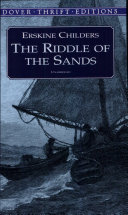
The Riddle of the Sands
The Riddle of the Sands by Erskine Childers (1903)
Two young Englishmen on a sailing holiday in the Frisian Islands stumble upon a German plot to invade England. The first modern spy novel — written as a warning that became terrifyingly prophetic.
Historical Significance:
Erskine Childers, an Anglo-Irish civil servant and expert sailor, published The Riddle of the Sands in 1903 to alert Britain to the real threat of German naval expansion. The novel's detailed descriptions of North Sea sailing, tidal navigation, and coastal geography were so accurate that the German government believed it was based on actual intelligence. The book influenced the British Admiralty to establish naval bases at Scapa Flow and Rosyth. Childers himself went on to become an Irish Republican revolutionary and was executed by the Irish Free State in 1922. His dying words to the firing squad were: "Take a step or two forwards, lads. It will be easier that way."
This public domain classic was originally published in 1903. Free to read and share.
Free
eBook
FREE
Greenmantle
Greenmantle by John Buchan (1916)
Richard Hannay is sent behind enemy lines during World War I to investigate a German plot to use Islamic jihad to destabilize the British Empire. A thrilling spy adventure across wartime Europe to Constantinople.
Historical Significance:
The sequel to The Thirty-Nine Steps, published in 1916 during World War I, Greenmantle was remarkably prescient about the strategic importance of the Middle East and the potential weaponization of religious fervor. Buchan, who worked in British military intelligence, based the plot on real German attempts to foment an Islamic uprising against Britain. The novel introduced the villain Doktor von Doorn and the memorable American character John S. Blenkiron. It remains one of the finest World War I adventure novels and a landmark of the spy thriller genre.
This public domain classic was originally published in 1916. Free to read and share.
Free

eBook
FREE
My Man Jeeves
My Man Jeeves by P. G. Wodehouse
An eight-story collection of comic predicaments. Four stories feature Bertie Wooster and Jeeves: Leave It to Jeeves, Jeeves and the Unbidden Guest, Jeeves and the Hard-Boiled Egg, and The Aunt and the Sluggard.
The other four feature Reggie Pepper: Absent Treatment, Helping Freddie, Rallying Round Old George, and Doing Clarence a Bit of Good. Both sets belong to this edition and appear in their original collection order.
Retained text source: Project Gutenberg ebook 8164.
Free
eBook
FREE
Arrowsmith
Arrowsmith by Sinclair Lewis (1925)
Martin Arrowsmith, an idealistic young doctor, battles against commercial medicine, institutional politics, and his own ambition to pursue pure scientific research. Lewis' most sympathetic novel and his tribute to the scientific spirit.
Historical Significance:
Published in 1925, Arrowsmith was awarded the Pulitzer Prize for Fiction — which Lewis famously declined, saying the prize was awarded not for the best novel but for the one that "best presents the wholesome atmosphere of American life." Lewis' refusal was a deliberate provocation that made national headlines. The novel was written with extensive research assistance from bacteriologist Paul de Kruif, giving it scientific accuracy rare in fiction. It remains the most beloved American novel about medicine and science, inspiring generations of young people to pursue research careers.
This public domain classic was originally published in 1925. Free to read and share.
Free
eBook
FREE
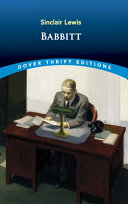
Babbitt
Babbitt by Sinclair Lewis (1922)
George F. Babbitt, a middle-aged real estate broker in the fictional city of Zenith, is the ultimate conformist — booster, joiner, and upholder of conventional values — until a midlife crisis drives him to rebellion. The definitive satire of American middle-class life.
Historical Significance:
Published in 1922, Babbitt made "Babbitt" and "Babbittry" permanent additions to the English language, meaning smug, materialistic conformity. Lewis' satirical portrait of a man who believes everything his culture tells him — that success means money, that conformity means virtue, that possessions mean happiness — was so precise that readers across America recognized themselves or their neighbors. The novel contributed to Lewis becoming the first American to win the Nobel Prize for Literature in 1930. H.L. Mencken called it "the best picture of an American community ever done."
This public domain classic was originally published in 1922. Free to read and share.
Free

eBook
FREE
The Magnificent Ambersons
The Magnificent Ambersons by Booth Tarkington (1918)
The decline of the aristocratic Amberson family as the automobile age transforms their Midwestern city. George Amberson Minafer, spoiled and arrogant, gets his "comeuppance" as the world his family built crumbles around him.
Historical Significance:
Booth Tarkington won the Pulitzer Prize for The Magnificent Ambersons in 1919 — his second Pulitzer (a feat matched only by William Faulkner). The novel captures the moment when American small-town life was destroyed by industrialization and the automobile. Orson Welles' 1942 film adaptation is considered one of the greatest American films, despite being drastically re-edited by the studio against Welles' wishes. The novel's theme — that progress creates losers as well as winners — resonates in every era of technological disruption.
This public domain classic was originally published in 1918. Free to read and share.
Free
eBook
FREE
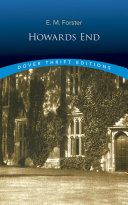
Howards End
Howards End by E.M. Forster (1910)
"Only connect!" The Schlegel sisters (intellectual, liberal) and the Wilcox family (practical, conservative) are drawn together by a country house called Howards End. Forster's meditation on class, culture, and the soul of England.
Historical Significance:
Published in 1910, Howards End was Forster's most ambitious attempt to bridge the divisions in Edwardian England — between rich and poor, head and heart, culture and commerce. The novel's epigraph, "Only connect the prose and the passion," became one of literature's most quoted injunctions. The Merchant Ivory 1992 film, starring Anthony Hopkins and Emma Thompson (who won the Oscar), was a critical and commercial triumph. The novel anticipated England's transformation from an imperial power to a modern welfare state, making it one of the most prescient novels of its era.
This public domain classic was originally published in 1910. Free to read and share.
Free

eBook
FREE
The Voyage Out
The Voyage Out by Virginia Woolf (1915)
Rachel Vinrace, a sheltered young Englishwoman, sails to South America, falls in love, and confronts the mysteries of adulthood, desire, and death. Woolf's first novel — already showing the brilliance that would transform English fiction.
Historical Significance:
Virginia Woolf spent six years writing and rewriting The Voyage Out, completing it in 1913 but suffering a severe mental breakdown before its publication in 1915. The novel already contains the seeds of everything Woolf would become: the sensitivity to consciousness, the feminist questioning of women's roles, the lyrical prose, and the preoccupation with death. Rachel's sudden death from fever has been read as both a rejection of the marriage plot and a reflection of Woolf's own precarious mental state. It is a remarkable debut that announces one of the 20th century's greatest literary voices.
This public domain classic was originally published in 1915. Free to read and share.
Free

eBook
FREE
Mrs Dalloway
Mrs Dalloway by Virginia Woolf (1925)
"Mrs. Dalloway said she would buy the flowers herself." One day in the life of Clarissa Dalloway as she prepares for a party in post-war London, her consciousness flowing between past and present, joy and despair.
Historical Significance:
Published in 1925, Mrs Dalloway was Virginia Woolf's fourth novel and her first masterpiece. Using a stream-of-consciousness technique influenced by James Joyce, Woolf mapped the interior lives of her characters with unprecedented delicacy. The novel takes place on a single day in June 1923, paralleling the society hostess Clarissa with the shell-shocked war veteran Septimus Warren Smith — connected only by the striking of Big Ben. Michael Cunningham's The Hours (1998) reimagined Mrs Dalloway across three time periods, winning the Pulitzer Prize. Nicole Kidman won an Oscar playing Woolf in the 2002 film adaptation.
This public domain classic was originally published in 1925. Free to read and share.
Free
eBook
FREE
The Rainbow
The Rainbow by D.H. Lawrence (1915)
Three generations of the Brangwen family in the English Midlands, from the agricultural rhythms of the 1840s to the industrial upheaval of the early 1900s. Lawrence's most lyrical novel — and the one that got him prosecuted for obscenity.
Historical Significance:
Published in September 1915, The Rainbow was seized by police and all copies destroyed by court order in November 1915 under the Obscene Publications Act. The prosecution was motivated less by sexual content (mild by modern standards) than by Lawrence's positive depiction of a lesbian relationship and his anti-war stance during World War I. The suppression devastated Lawrence and contributed to his self-imposed exile from England. The novel was not republished in Britain until 1949. It is now recognized as one of the great English novels — a sweeping family saga that traces how industrialization and modernity transformed English life and consciousness.
This public domain classic was originally published in 1915. Free to read and share.
Free
eBook
FREE
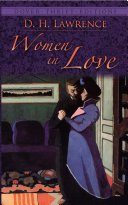
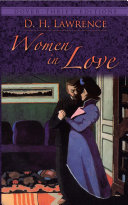
Women in Love
Women in Love by D.H. Lawrence (1920)
Two sisters — Ursula and Gudrun Brangwen — pursue relationships with two friends — Rupert Birkin and Gerald Crich — through a radical exploration of love, power, sexuality, and modern industrial civilization.
Historical Significance:
Lawrence completed Women in Love in 1916 but could not find a publisher until 1920 — it was considered too sexually explicit and too critical of English society during wartime. The novel is now regarded as Lawrence's greatest achievement: a fierce, visionary work that rejects both Victorian repression and modern mechanization. The wrestling scene between Birkin and Gerald is one of the most famous and analyzed passages in English literature. Ken Russell's 1969 film adaptation, starring Glenda Jackson and Oliver Reed, won Jackson the Academy Award for Best Actress.
This public domain classic was originally published in 1920. Free to read and share.
Free
eBook
FREE
Sons and Lovers
Sons and Lovers by D.H. Lawrence (1913)
Paul Morel, a sensitive young man in a Nottinghamshire mining town, is torn between his intensely possessive mother and the women he loves. Lawrence's autobiographical masterpiece and the novel that launched his career.
Historical Significance:
Published in 1913, Sons and Lovers was Lawrence's third novel and his breakthrough. It drew directly on his own childhood — his father was a coal miner, his mother was educated and ambitious, and their volatile marriage dominated his emotional life. Freud's theories were just reaching England, and the novel is one of the earliest and most powerful explorations of the Oedipus complex in fiction. Lawrence's working-class perspective was revolutionary — no major English novelist before him had depicted the mining communities of the industrial Midlands with such intimacy and authority.
This public domain classic was originally published in 1913. Free to read and share.
Free

eBook
FREE
The Return of the Native
The Return of the Native by Thomas Hardy (1878)
On the brooding Egdon Heath, Clym Yeobright returns from Paris, the beautiful Eustacia Vye longs to escape, and the reddleman Diggory Venn watches over all. A tragedy of thwarted desires set against Hardy's most powerful landscape.
Historical Significance:
Published in 1878, The Return of the Native opens with one of literature's most famous descriptive chapters — "A Face on Which Time Makes but Little Impression" — establishing Egdon Heath as a dark, elemental presence that dwarfs the human dramas played out upon it. Hardy was influenced by Greek tragedy, and the novel follows a near-classical structure of inevitability and doom. Eustacia Vye — passionate, restless, modern — is one of Hardy's most compelling and sympathetic characters, trapped in a world too small for her ambitions.
This public domain classic was originally published in 1878. Free to read and share.
Free
eBook
FREE
Jude the Obscure
Jude the Obscure by Thomas Hardy (1895)
Jude Fawley, a self-taught stonemason, dreams of studying at the university of Christminster (Oxford) but is thwarted at every turn by class, convention, and his own disastrous relationships. Hardy's darkest and most controversial novel.
Historical Significance:
The critical reaction to Jude the Obscure was so savage that Hardy never wrote another novel. The Bishop of Wakefield burned his copy. Critics called it "Jude the Obscene" for its frank treatment of sexuality, marriage, and the hypocrisy of the church. Hardy was devastated and spent the remaining 33 years of his life writing poetry instead. The novel's attack on the class barriers to education, its sympathetic portrayal of divorce and free love, and the horrifying fate of the children made it genuinely shocking in 1895. Modern readers recognize it as Hardy's most powerful and prophetic work.
This public domain classic was originally published in 1895. Free to read and share.
Free
eBook
FREE
Silas Marner
Silas Marner: The Weaver of Raveloe by George Eliot (1861)
A lonely, miserly weaver, falsely accused of theft and betrayed by his best friend, withdraws from humanity — until a golden-haired orphan child appears at his hearth and redeems his life. Eliot's most compact and beloved novel.
Historical Significance:
George Eliot wrote Silas Marner in just four months in 1861, calling it a story that "thrust itself between me and the other book I was meditating." At just 70,000 words, it is her shortest and most accessible novel — a fairy tale for adults about how love and community can heal even the deepest wounds. The parallel between Silas's stolen gold and the golden-haired child who replaces it gives the novel a symbolic richness beneath its simple surface. It remains one of the most widely assigned novels in English schools.
This public domain classic was originally published in 1861. Free to read and share.
Free
eBook
FREE
The Mill on the Floss
The Mill on the Floss by George Eliot (1860)
Maggie Tulliver, passionate, intelligent, and trapped by the narrow expectations of provincial English life, struggles between duty to her family and her own desires. Eliot's most autobiographical and emotionally powerful novel.
Historical Significance:
Published in 1860, The Mill on the Floss drew heavily on George Eliot's (Mary Ann Evans') own childhood in rural Warwickshire and her painful estrangement from her brother Isaac after she began living with the married George Henry Lewes. Maggie Tulliver's hunger for knowledge in a world that sees education as wasted on women, and her tormented relationship with her beloved brother Tom, mirror Eliot's own experiences. The novel's devastating flood ending remains one of the most debated conclusions in English fiction.
This public domain classic was originally published in 1860. Free to read and share.
Free
eBook
FREE
Vanity Fair
Vanity Fair: A Novel Without a Hero by William Makepeace Thackeray (1848)
The contrasting fortunes of sweet, passive Amelia Sedley and brilliant, ruthless Becky Sharp as they navigate Regency-era English society. Thackeray's satirical masterpiece — "a novel without a hero" because everyone is flawed.
Historical Significance:
Serialized in 20 monthly parts from January 1847 to July 1848, Vanity Fair was Thackeray's bid to rival Dickens as England's greatest novelist. Where Dickens created lovable heroes and hissable villains, Thackeray created morally ambiguous characters in a corrupt world. Becky Sharp — witty, amoral, irresistibly charming — is one of literature's great anti-heroines. The title comes from John Bunyan's Pilgrim's Progress, where Vanity Fair is a marketplace of worldly temptations. The novel has been adapted numerous times, including a 2004 film starring Reese Witherspoon.
This public domain classic was originally published in 1848. Free to read and share.
Free
eBook
FREE
The Wings of the Dove
The Wings of the Dove by Henry James (1902)
Kate Croy plots to have her impoverished lover Merton Densher court Milly Theale, a wealthy American heiress who is dying, so they can inherit her fortune. But genuine love complicates the scheme.
Historical Significance:
Published in 1902 as part of James' late "major phase," The Wings of the Dove is considered one of his three supreme achievements alongside The Ambassadors and The Golden Bowl. James' prose style had become extraordinarily complex — sentences that circle and qualify and reveal through indirection. The novel explores how the innocent generosity of a dying woman redeems those who sought to exploit her. Helena Bonham Carter starred in the 1997 film adaptation. The novel's moral complexity — where sympathy for the schemers coexists with admiration for their victim — is quintessentially Jamesian.
This public domain classic was originally published in 1902. Free to read and share.
Free
No classics match your filters.