Books About

BoingyBooks Classics

17 published works

About the Author

BoingyBooks Classics

BoingyBooks Classics

BoingyBooks Classics brings timeless children's stories to life with interactive read-along technology. Each book features word-by-word bouncing ball animation synchronized to professional AI narration, helping young readers follow along and build reading skills. Our library includes beloved public domain classics and Creative Commons picture books from around the world — all free to read, share, and enjoy. Powered by BoingyBooks, the interactive children's book platform at boingybooks.com.

17 books published on BoingyBooks

All Books

The Mango Tree Voice

The Mango Tree

The Mango Tree (English), written by Kanchan Bannerjee, illustrated by Kavya Singh, published by Pratham Books under a CC BY 4.0 license on StoryWeaver. 'The Mango Tree' has been published on StoryWeaver by Pratham Books. The illustration and design of this book has been undertaken by Srishti School of Art, Design and Technology. www.prathambooks.org This BoingyBooks Classics edition is an interactive read-along adaptation by John Shoufler. You may copy, modify, distribute, and use the original story and illustrations commercially under CC BY 4.0 (https://creativecommons.org/licenses/by/4.0/) if you keep this attribution. John Shoufler is not the original writer or illustrator. StoryWeaver's separate read-along videos are not used.

$1.99 9 pages
Details
Baby Talk Voice

Baby Talk

Originally published by Book Dash under a Creative Commons CC BY 4.0 license. This book can be read for free on www.bookdash.org and was created by Sope Martins, Alex Latimer, Thokozani Mkhize, Zanri Kritzinger. Interactive read-along edition narrated by John Shoufler.

$1.99 17 pages
Details
Bathtub Safari Voice

Bathtub Safari

Originally published by Book Dash under a Creative Commons CC BY 4.0 license. This book can be read for free on www.bookdash.org and was created by Tracy Lynn Chemaly, Robert McEwan, Sarah-Jane Williams. Interactive read-along edition narrated by John Shoufler.

$1.99 18 pages
Details
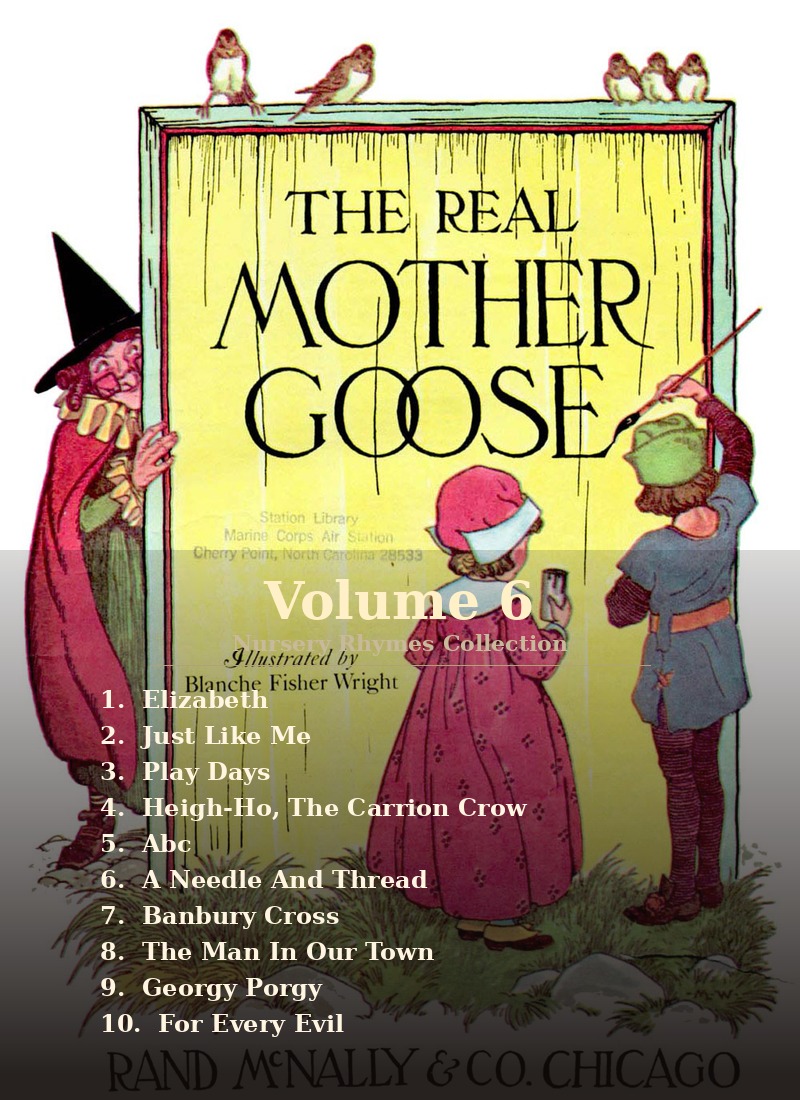
Mother Goose Nursery Rhymes: Volume 6 Voice

Mother Goose Nursery Rhymes: Volume 6

Ten beloved nursery rhymes from The Real Mother Goose (1916), illustrated by Blanche Fisher Wright. This interactive read-along edition features the original public domain illustrations paired with word-by-word bouncing text. Rhymes in this volume: 1. Elizabeth 2. Just Like Me 3. Play Days 4. Heigh-Ho, The Carrion Crow 5. Abc 6. A Needle And Thread 7. Banbury Cross 8. The Man In Our Town 9. Georgy Porgy 10. For Every Evil These rhymes are drawn from the rich oral tradition of English nursery verse, many dating back to the 17th and 18th centuries. They were first collected and published in this illustrated form by Blanche Fisher Wright in 1916.

$1.99 10 pages
Details
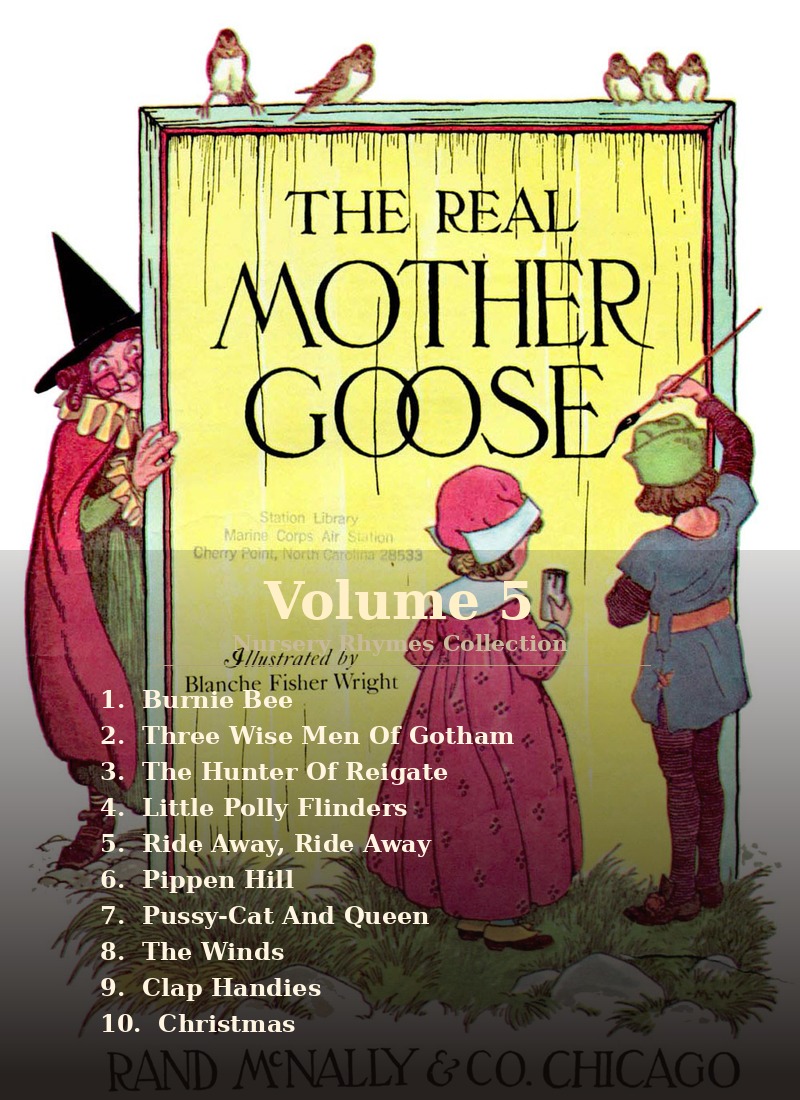
Mother Goose Nursery Rhymes: Volume 5 Voice

Mother Goose Nursery Rhymes: Volume 5

Ten beloved nursery rhymes from The Real Mother Goose (1916), illustrated by Blanche Fisher Wright. This interactive read-along edition features the original public domain illustrations paired with word-by-word bouncing text. Rhymes in this volume: 1. Burnie Bee 2. Three Wise Men Of Gotham 3. The Hunter Of Reigate 4. Little Polly Flinders 5. Ride Away, Ride Away 6. Pippen Hill 7. Pussy-Cat And Queen 8. The Winds 9. Clap Handies 10. Christmas These rhymes are drawn from the rich oral tradition of English nursery verse, many dating back to the 17th and 18th centuries. They were first collected and published in this illustrated form by Blanche Fisher Wright in 1916.

$1.99 10 pages
Details
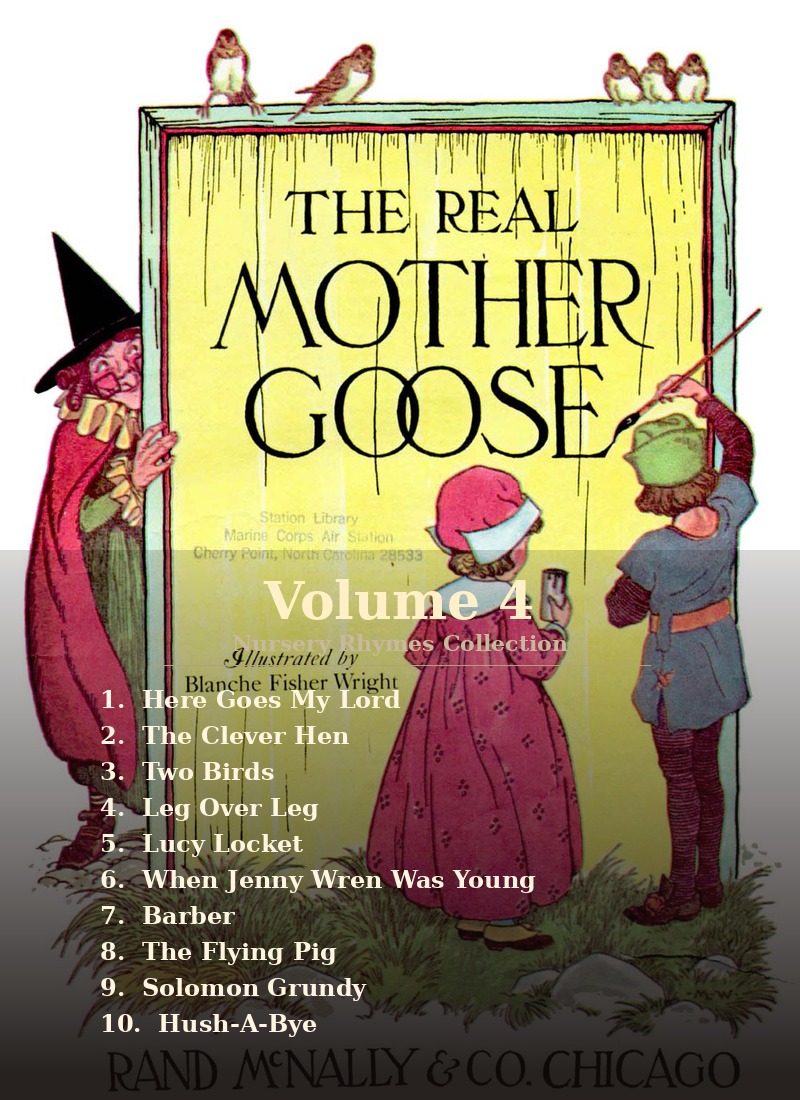
Mother Goose Nursery Rhymes: Volume 4 Voice

Mother Goose Nursery Rhymes: Volume 4

Ten beloved nursery rhymes from The Real Mother Goose (1916), illustrated by Blanche Fisher Wright. This interactive read-along edition features the original public domain illustrations paired with word-by-word bouncing text. Rhymes in this volume: 1. Here Goes My Lord 2. The Clever Hen 3. Two Birds 4. Leg Over Leg 5. Lucy Locket 6. When Jenny Wren Was Young 7. Barber 8. The Flying Pig 9. Solomon Grundy 10. Hush-A-Bye These rhymes are drawn from the rich oral tradition of English nursery verse, many dating back to the 17th and 18th centuries. They were first collected and published in this illustrated form by Blanche Fisher Wright in 1916.

$1.99 10 pages
Details
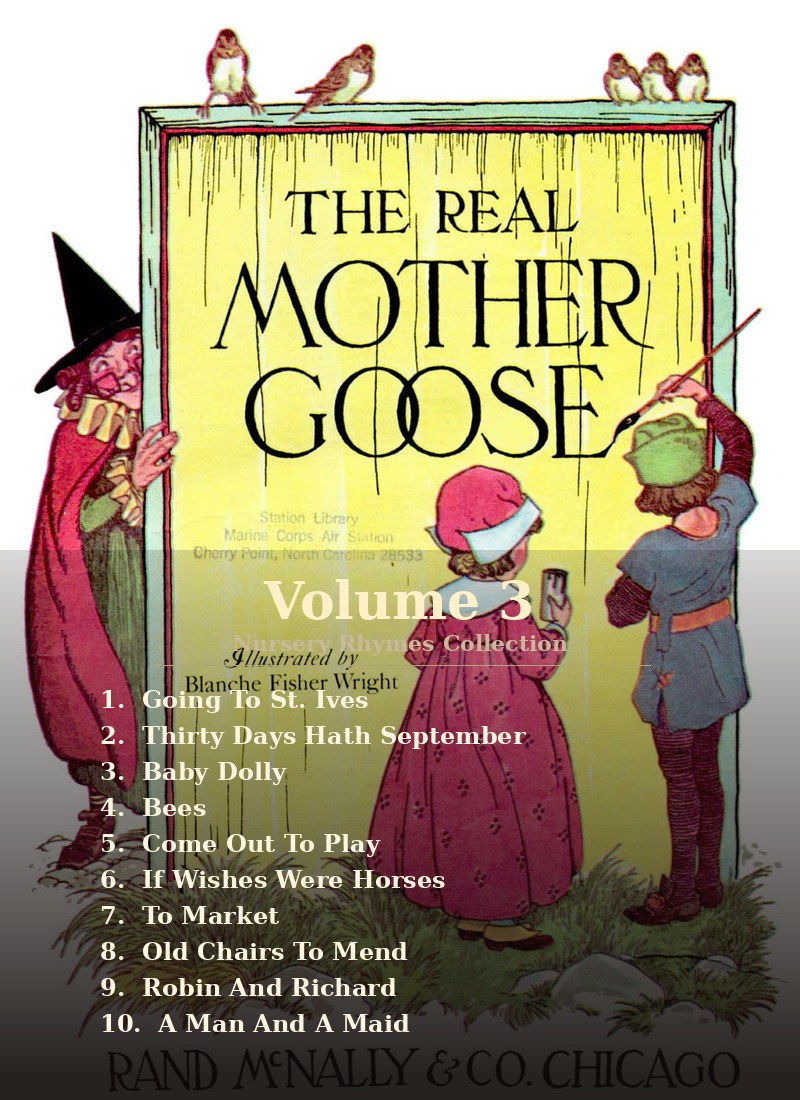
Mother Goose Nursery Rhymes: Volume 3 Voice

Mother Goose Nursery Rhymes: Volume 3

Ten beloved nursery rhymes from The Real Mother Goose (1916), illustrated by Blanche Fisher Wright. This interactive read-along edition features the original public domain illustrations paired with word-by-word bouncing text. Rhymes in this volume: 1. Going To St. Ives 2. Thirty Days Hath September 3. Baby Dolly 4. Bees 5. Come Out To Play 6. If Wishes Were Horses 7. To Market 8. Old Chairs To Mend 9. Robin And Richard 10. A Man And A Maid These rhymes are drawn from the rich oral tradition of English nursery verse, many dating back to the 17th and 18th centuries. They were first collected and published in this illustrated form by Blanche Fisher Wright in 1916.

$1.99 10 pages
Details
Mother Goose Nursery Rhymes: Volume 2 Voice

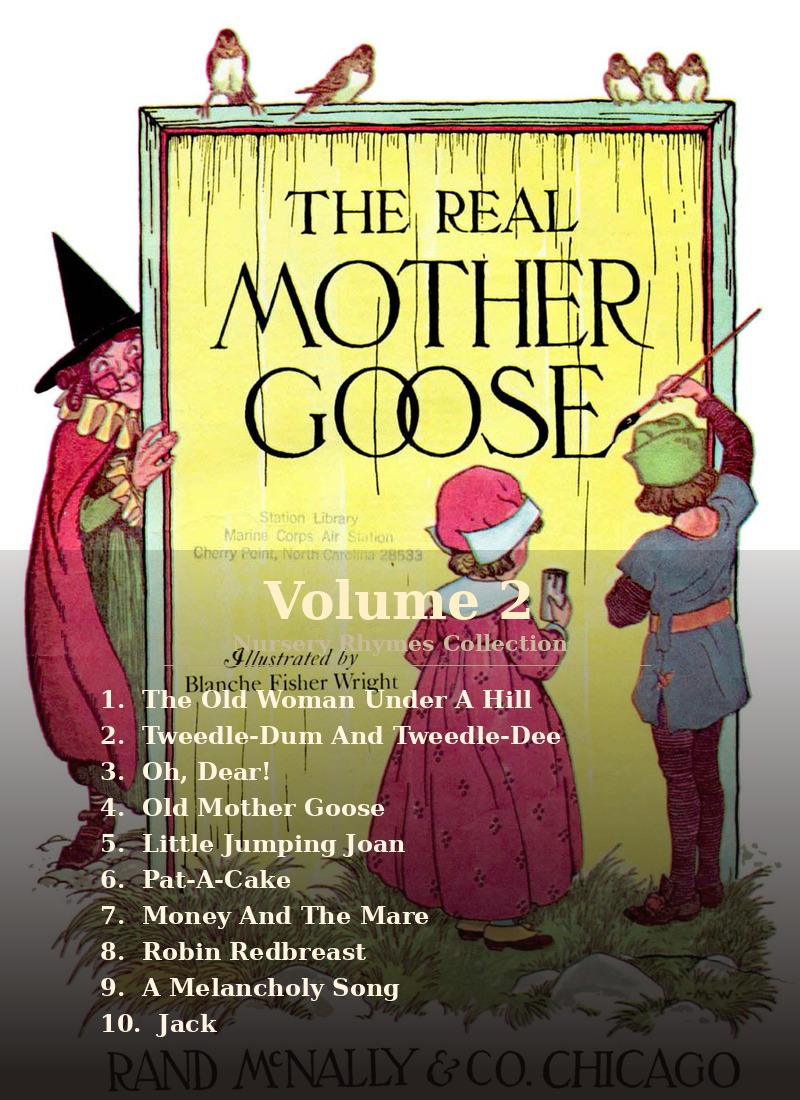
Mother Goose Nursery Rhymes: Volume 2

Ten beloved nursery rhymes from The Real Mother Goose (1916), illustrated by Blanche Fisher Wright. This interactive read-along edition features the original public domain illustrations paired with word-by-word bouncing text. Rhymes in this volume: 1. The Old Woman Under A Hill 2. Tweedle-Dum And Tweedle-Dee 3. Oh, Dear! 4. Old Mother Goose 5. Little Jumping Joan 6. Pat-A-Cake 7. Money And The Mare 8. Robin Redbreast 9. A Melancholy Song 10. Jack These rhymes are drawn from the rich oral tradition of English nursery verse, many dating back to the 17th and 18th centuries. They were first collected and published in this illustrated form by Blanche Fisher Wright in 1916.

$1.99 10 pages
Details
Mother Goose Nursery Rhymes: Volume 1 Voice

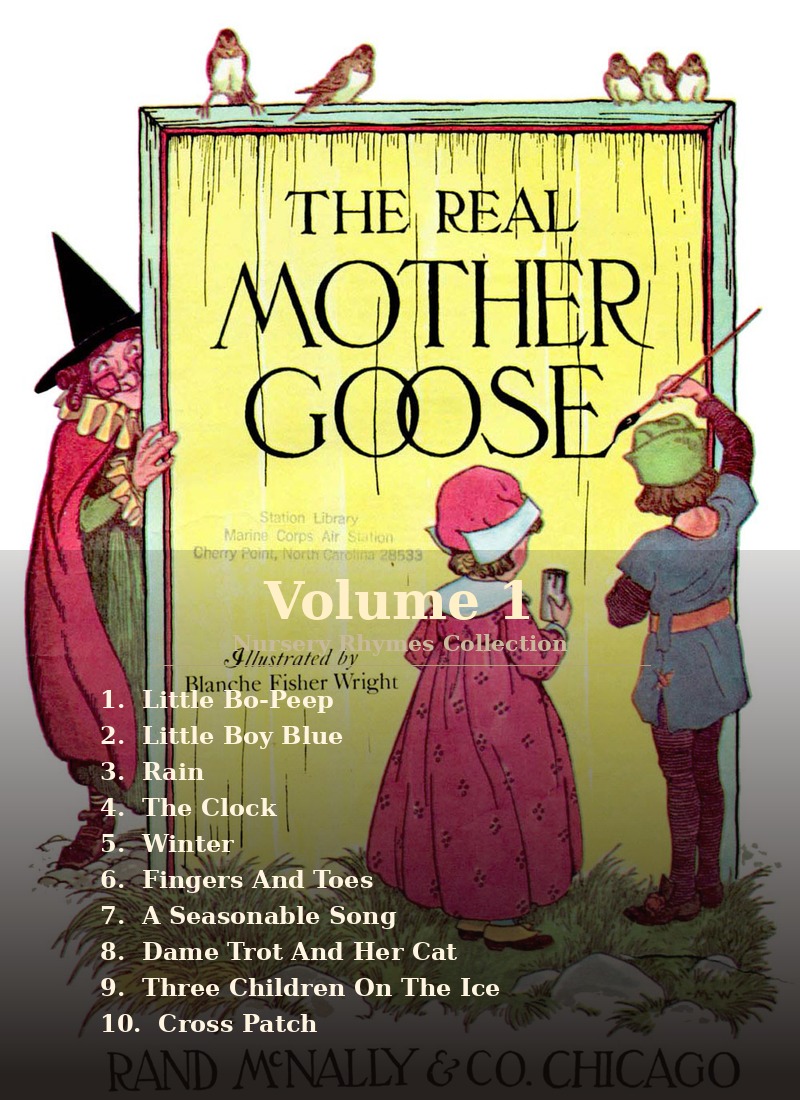
Mother Goose Nursery Rhymes: Volume 1

Ten beloved nursery rhymes from The Real Mother Goose (1916), illustrated by Blanche Fisher Wright. This interactive read-along edition features the original public domain illustrations paired with word-by-word bouncing text. Rhymes in this volume: 1. Little Bo-Peep 2. Little Boy Blue 3. Rain 4. The Clock 5. Winter 6. Fingers And Toes 7. A Seasonable Song 8. Dame Trot And Her Cat 9. Three Children On The Ice 10. Cross Patch Historical Origins: Little Bo-Peep — First recorded around 1805. 'Bo-peep' referred to a peek-a-boo game from the 16th century, referenced by Shakespeare in King Lear. May also allude to the punishment pillory. Little Boy Blue — First published in Tommy Thumb's Song Book (1744). The boy was attributed to Cardinal Thomas Wolsey, Henry VIII's Lord Chancellor, who was the son of an Ipswich butcher. Rain — An ancient weather charm. Children have chanted rain-banishing verses across Europe for centuries, reflecting a folk belief that spoken words could influence the weather. The Clock — A teaching rhyme from 18th-century England, when household clocks became common. Used to help children learn to tell time through verse. Winter — A seasonal folk verse capturing English countryside winters. Part of the oral tradition mothers recited during long cold evenings by the fire. Fingers And Toes — A counting rhyme teaching toddlers numbers using their own body, a tradition dating back centuries across European cultures. A Seasonable Song — A street vendor's cry turned nursery rhyme. London's streets were filled with such cries as sellers hawked hot pease and other seasonal foods. Dame Trot And Her Cat — First printed in 1803, though the character was known a century earlier, appearing in Pills to Purge Melancholy (1706). A close cousin to Old Mother Hubbard. Three Children On The Ice — A cautionary tale warning about frozen ponds, reflecting a real danger in pre-modern England where drowning through ice was a leading cause of childhood winter deaths. Cross Patch — First published in Mother Goose's Melody (c.1765). 'Crosspatch' meant a cranky person; 'patch' was an old word for fool, from the haphazard patches worn by court jesters.

$1.99 10 pages
Details
Dracula

Dracula

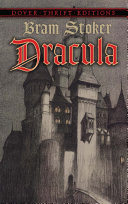
Dracula by Bram Stoker (1897) The novel that created the modern vampire myth and launched an entire genre of horror fiction. Count Dracula is one of the most recognizable characters in world literature. Historical Significance: Bram Stoker, an Irish author and theater manager, spent seven years researching and writing Dracula. He drew inspiration from Eastern European folklore, the historical Vlad the Impaler (Vlad III Dracula of Wallachia), and Emily Gerard's 1885 essay "Transylvanian Superstitions." Stoker never visited Transylvania — he researched it entirely through books at the British Museum. Published on May 26, 1897, by Archibald Constable and Company, the novel was well-received but not an immediate bestseller. Its epistolary format (told through diary entries, letters, newspaper clippings, and ship logs) was innovative for the time and created an atmosphere of mounting dread. The character of Count Dracula — aristocratic, seductive, ancient, and terrifying — was partly inspired by Stoker's employer, the actor Sir Henry Irving, whose commanding stage presence and domineering personality fascinated Stoker for decades. Cultural Impact: Dracula has been adapted into more films than any other novel in history — over 200 and counting. Bela Lugosi's 1931 portrayal established the cape-and-accent image. The novel created the template for virtually all vampire fiction that followed, from Anne Rice to Twilight to Castlevania. Transylvania tourism exists largely because of this book. The word "Dracula" is recognized in virtually every language on Earth. This public domain classic was originally published in 1897. Free to read and share.

$0.00 0 pages
Details
Alice's Adventures in Wonderland

Alice's Adventures in Wonderland

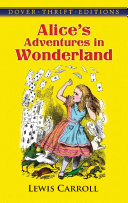
Alice's Adventures in Wonderland by Lewis Carroll (1865) One of the most beloved and influential children's books ever written, Alice's Adventures in Wonderland began as a story told by Charles Lutwidge Dodgson (pen name Lewis Carroll) to Alice Liddell and her sisters during a boat trip on the Thames on July 4, 1862. Historical Significance: Carroll, a mathematics lecturer at Christ Church, Oxford, wrote the story down at Alice Liddell's request and presented her with a handwritten manuscript titled "Alice's Adventures Under Ground" in November 1864. Encouraged by friends including George MacDonald (whose children loved the story), Carroll expanded and published it with John Tenniel's iconic illustrations in 1865. The book broke every rule of Victorian children's literature. Where other children's books were moralistic and instructional, Alice was pure nonsense — playful, subversive, and wildly imaginative. The Cheshire Cat, the Mad Hatter's Tea Party, the Queen of Hearts — Carroll created characters that have become permanent fixtures of world culture. Carroll was also a pioneering photographer, logician, and mathematician. Many scholars believe the book's wordplay and logic puzzles reflect his mathematical mind, with hidden references to non-Euclidean geometry and abstract algebra. Cultural Impact: Alice has been translated into at least 174 languages (more than any other novel). It has inspired Disney's animated classic (1951), Tim Burton's films, video games, fashion, art, and an entire literary genre of "nonsense literature." The phrase "down the rabbit hole" has entered everyday English. Scientists have named mathematical concepts, psychological conditions (Alice in Wonderland syndrome), and even a quantum physics phenomenon after the book. This public domain classic was originally published in 1865. Free to read and share.

$0.00 0 pages
Details
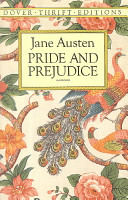
Pride and Prejudice

Pride and Prejudice

Pride and Prejudice by Jane Austen (1813) "It is a truth universally acknowledged, that a single man in possession of a good fortune, must be in want of a wife." — one of the most famous opening lines in all of literature. Historical Significance: Jane Austen completed this novel in 1797 under the title "First Impressions," but it was rejected by the publisher Thomas Cadell. She revised it extensively before it was finally published by Thomas Egerton on January 28, 1813. Austen sold the copyright for just £110 (roughly £10,000 today). The novel was an immediate success, with its first edition selling out within months. It offers a razor-sharp social commentary on class, marriage, and morality in Regency-era England, wrapped in one of literature's greatest love stories between Elizabeth Bennet and Fitzwilliam Darcy. Austen wrote during the Napoleonic Wars, yet her novels deliberately focus on the domestic world — "the little bit (two Inches wide) of Ivory on which I work," as she described it. This deliberate narrowing of scope allowed her to examine human nature with microscopic precision. Cultural Impact: Pride and Prejudice has never gone out of print in over 200 years. It has been translated into every major language, adapted into dozens of films and TV series (the 1995 BBC adaptation with Colin Firth being perhaps the most beloved), and inspired countless modern retellings including Bridget Jones's Diary. It consistently appears on "greatest novels ever written" lists and sells over 800,000 copies annually. This public domain classic was originally published in 1813. Free to read and share.

$0.00 0 pages
Details
The Great Gatsby

The Great Gatsby

The Great Gatsby by F. Scott Fitzgerald (1925) The defining novel of the Jazz Age and the American Dream, The Great Gatsby entered the public domain on January 1, 2021, becoming one of the most downloaded books in history overnight. Historical Significance: Fitzgerald wrote the novel in 1924 while living on the French Riviera, drawing on his experiences among the wealthy elite of Long Island's North Shore. Published by Scribner's on April 10, 1925, it was a commercial disappointment during Fitzgerald's lifetime, selling fewer than 20,000 copies before his death in 1940 at age 44. The novel's resurrection began during World War II, when the U.S. government distributed 155,000 copies to soldiers overseas as part of the Armed Services Editions. Soldiers brought it home, teachers began assigning it, and by the 1960s it had become the most taught novel in American high schools — a position it still holds today. Set in the summer of 1922, the novel follows narrator Nick Carraway's encounter with the mysterious millionaire Jay Gatsby, whose obsessive pursuit of the beautiful Daisy Buchanan serves as a meditation on wealth, class, love, and the corruption of the American Dream. Cultural Impact: The Great Gatsby now sells over 500,000 copies annually and has been adapted into five feature films, including Baz Luhrmann's 2013 version starring Leonardo DiCaprio. The green light at the end of Daisy's dock has become one of American literature's most enduring symbols. Fitzgerald's prose style — lyrical, precise, and devastating — influenced generations of writers. This public domain classic was originally published in 1925. Free to read and share.

$0.00 0 pages
Details
A Christmas Carol

A Christmas Carol

A Christmas Carol in Prose, Being a Ghost-Story of Christmas by Charles Dickens (1843) The story that saved Christmas. Ebenezer Scrooge, the Ghosts of Christmas Past, Present, and Yet to Come, and Tiny Tim — Dickens created the modern Christmas in a single novella. Historical Significance: Dickens wrote A Christmas Carol in just six weeks during October and November 1843, driven by financial pressures and outrage over child labor conditions he had witnessed in Manchester. He self-published it on December 19, 1843, and the entire first edition of 6,000 copies sold out by Christmas Eve. Before A Christmas Carol, Christmas was a relatively minor holiday in England and America. Church attendance was declining, the Puritan prohibition of Christmas celebrations still lingered, and there were no established secular traditions. Dickens almost single-handedly transformed Christmas into the family-centered celebration of generosity we know today. The novella was a direct response to a government report on child labor that horrified Dickens. Instead of writing a political pamphlet, he "resolved to strike a sledge hammer blow" through fiction. Scrooge's transformation from miser to generous benefactor was Dickens' argument that individual moral change could transform society. Cultural Impact: A Christmas Carol has never been out of print and has been adapted more than any other work of fiction — over 135 films, TV specials, stage productions, and musical adaptations. "Scrooge," "Bah, humbug!," and "God bless us, every one!" are embedded in the English language. The story is credited with reviving charitable giving and family celebrations as core Christmas values. This public domain classic was originally published in 1843. Free to read and share.

$0.00 0 pages
Details
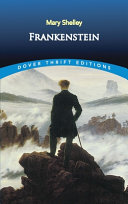
Frankenstein

Frankenstein

Frankenstein; or, The Modern Prometheus by Mary Wollstonecraft Shelley (1818) The most downloaded book on Project Gutenberg and one of the most influential novels ever written. Mary Shelley conceived this masterpiece at age 18 during the famous ghost story contest at the Villa Diodati on Lake Geneva in the summer of 1816, alongside Lord Byron and Percy Bysshe Shelley. Historical Significance: Frankenstein is widely considered the first true science fiction novel, predating the genre by decades. It was born from the "Year Without a Summer" (1816), when the eruption of Mount Tambora in Indonesia caused global climate disruption, trapping Shelley's literary circle indoors with nothing to do but tell ghost stories. The novel explores themes that remain urgently relevant: the ethics of scientific creation, the responsibility of creators to their creations, the dangers of unchecked ambition, and the nature of humanity itself. Victor Frankenstein's unnamed creature — often mistakenly called "Frankenstein" — is one of literature's most tragic figures, rejected by his creator and society alike. The 1818 first edition was published anonymously; many assumed Percy Shelley had written it. The 1831 revised edition, with Mary Shelley's name, is the version most commonly read today. This edition preserves the original 1818 text. Cultural Impact: The novel has been adapted into over 100 films, countless stage productions, and has become a cornerstone of Gothic literature. The word "Frankenstein" has entered everyday language as a metaphor for any creation that turns against its creator. It remains required reading in universities worldwide and consistently ranks among the top 10 most-read classic novels. This public domain classic was originally published in 1818. Free to read and share.

$0.00 0 pages
Details
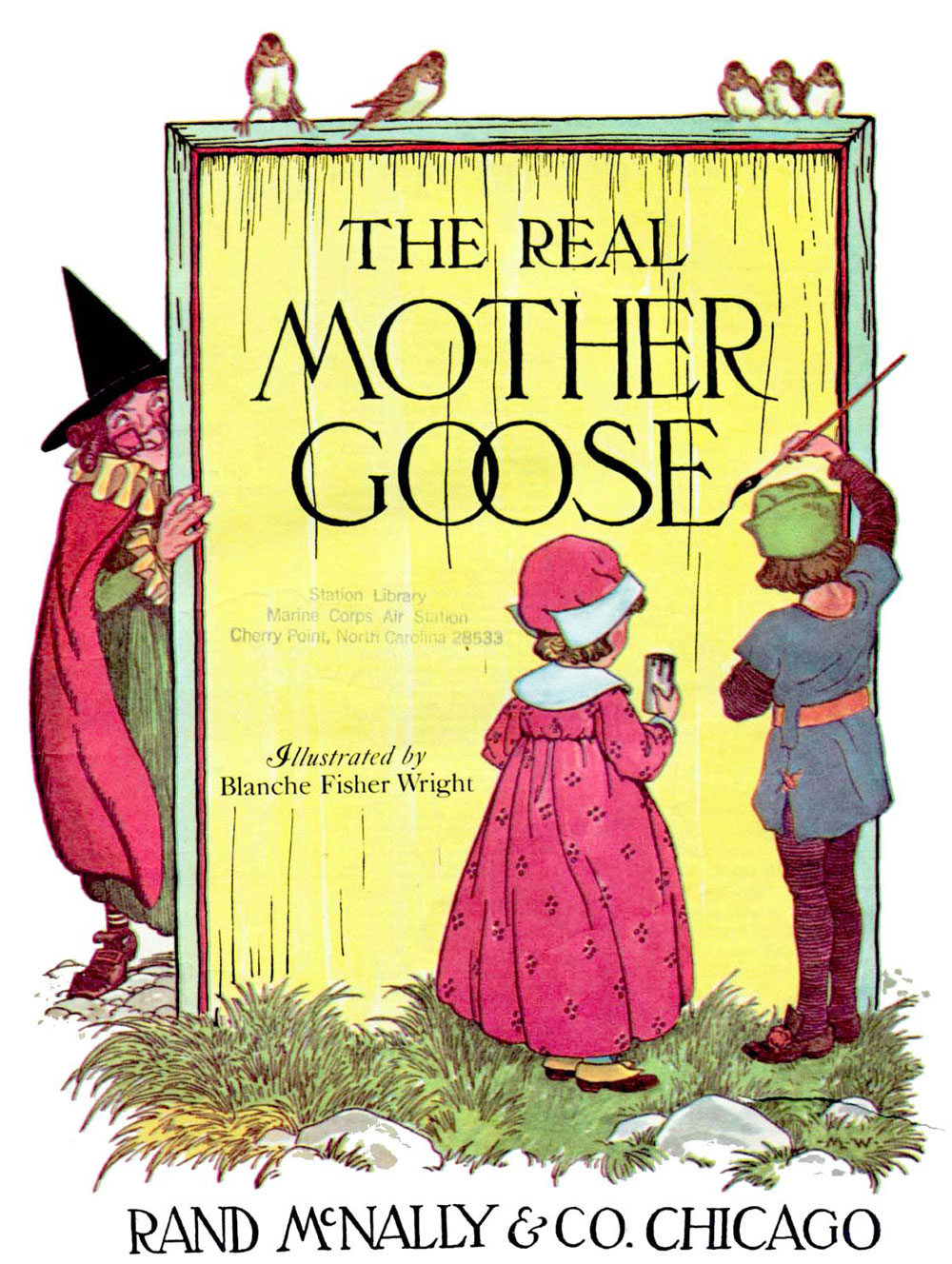
The Complete Real Mother Goose: 301 Nursery Rhymes

The Complete Real Mother Goose: 301 Nursery Rhymes

The Complete Real Mother Goose: 301 Classic Nursery Rhymes A comprehensive collection of every nursery rhyme from Blanche Fisher Wright's beloved 1916 edition of The Real Mother Goose, one of the most iconic nursery rhyme collections ever published. This complete compilation contains 301 rhymes organized into 30 chapters, featuring timeless favorites that have been passed down through generations: Little Bo-Peep, Little Boy Blue, Humpty Dumpty, Jack and Jill, Mary Mary Quite Contrary, Baa Baa Black Sheep, Jack Sprat, Old King Cole, Three Blind Mice, Hey Diddle Diddle, Sing a Song of Sixpence, London Bridge, Twinkle Twinkle Little Star, Georgie Porgie, Wee Willie Winkie, Old Mother Hubbard, Simple Simon, Pat-a-Cake, Ring a Ring o' Roses, Rock-a-Bye Baby, and hundreds more. Historical Origins: Many of these rhymes have fascinating — and sometimes dark — origins stretching back centuries: Little Bo-Peep (c.1805) — "Bo-peep" was a peek-a-boo game referenced by Shakespeare. It may also allude to the punishment pillory. Little Boy Blue (1744) — Attributed to Cardinal Thomas Wolsey, Henry VIII's Lord Chancellor and son of an Ipswich butcher. Humpty Dumpty — Widely believed to refer to a large cannon used by Royalist forces during the English Civil War siege of Colchester in 1648. Jack and Jill — May reference King Louis XVI ("Jack") and Marie Antoinette ("Jill") of France, or an earlier Scandinavian myth about children fetching water from the moon. Mary Mary Quite Contrary — Popularly linked to Bloody Mary (Mary I of England), with the "garden" representing graveyards and "silver bells" and "cockle shells" being instruments of torture. Ring a Ring o' Roses — Long claimed to describe the Great Plague of London (1665), though scholars debate this interpretation. Baa Baa Black Sheep — May reference medieval English wool taxes under King Edward I, where the wool was split three ways: one-third to the king, one-third to the church, and one-third to the farmer. Old King Cole — Possibly refers to a 3rd-century Celtic king, Coel Hen, ruler of Roman Britain, known as "Old King Cole" in Welsh tradition. London Bridge Is Falling Down — References the many collapses and rebuildings of London Bridge since Roman times. Some historians connect it to a Viking attack in 1014. Rock-a-Bye Baby — Possibly written about the son of King James II, whose legitimacy was questioned. The "wind" may represent the Protestant political forces that would topple the Stuart dynasty. About This Edition: This public domain classic was originally published by Rand McNally & Company in 1916. The text and illustrations by Blanche Fisher Wright are in the public domain and free to read, share, and enjoy. This digital edition preserves the complete original text with all 301 rhymes.

$0.00 0 pages
Details
'Twas the Night before Christmas Voice

'Twas the Night before Christmas

A public domain classic, originally published before 1928. Free to read and share. About This Edition This interactive read-along edition features the original illustrations by Jessie Willcox Smith from the 1912 Houghton Mifflin edition, paired with professional narration, word-by-word bouncing ball animation, and touch-to-pronounce on every word — helping young readers follow along and build reading skills. History of the Poem "A Visit from St. Nicholas," widely known as "Twas the Night Before Christmas," is one of the most beloved and influential poems in the English language. It was first published anonymously on December 23, 1823, in the Troy Sentinel newspaper in Troy, New York. The poem is traditionally attributed to Clement Clarke Moore, a professor of Biblical Learning at the General Theological Seminary in New York City. Moore reportedly wrote the poem for his children on Christmas Eve 1822, never intending it for publication. A family friend is believed to have submitted it to the newspaper without his knowledge. Moore did not publicly claim authorship until 1844, when it was included in his anthology of poems. Some scholars have alternatively attributed the poem to Henry Livingston Jr., a New York farmer and poet, based on claims by his descendants and stylistic analysis. This attribution remains debated among literary historians. The poem single-handedly shaped the modern American image of Santa Claus. Before its publication, St. Nicholas was depicted in various ways across different traditions. The poem established the now-iconic details: a jolly, plump figure who travels by reindeer-drawn sleigh, enters homes through the chimney, fills stockings with toys, and has a workshop at the North Pole. The eight reindeer — Dasher, Dancer, Prancer, Vixen, Comet, Cupid, Donder (later Donner), and Blitzen — were named for the first time in this poem. The poem also helped establish Christmas Eve as a night of anticipation and gift-giving in American culture, shifting the holiday focus toward children and family celebration. About the Illustrations The illustrations in this edition are by Jessie Willcox Smith (1863-1935), one of the most prominent female illustrators of the Golden Age of American Illustration. Smith studied under Howard Pyle at the Drexel Institute and became renowned for her sensitive portrayals of children. Her illustrations for this poem, first published by Houghton Mifflin in 1912, are considered among the finest visual interpretations of the classic text. The paintings capture the warmth, wonder, and magic of Christmas Eve through rich colors and intimate domestic scenes. Publication History 1823 — First published anonymously in the Troy Sentinel 1837 — First included in The New-York Book of Poetry 1844 — Clement Clarke Moore claims authorship in Poems 1848 — First standalone illustrated edition published 1864 — Thomas Nast creates the first major Santa Claus illustrations inspired by the poem for Harpers Weekly 1912 — Jessie Willcox Smith illustrates the definitive Houghton Mifflin edition used in this interactive book The poem entered the public domain in the United States and is freely available for reproduction, adaptation, and sharing.

$1.99 15 pages
Details