New eBooks
0 booksNo eBooks Yet
Be the first to publish an eBook on BoingyBooks!
🎓 Your Free Digital Library Awaits
Access 232+ classic ebooks — from Shakespeare to Sherlock Holmes. Read on any device, save your progress, build your library.
Create Free Account →Classic Literature
26 free classicsTimeless works from the public domain, beautifully formatted for the BoingyBooks reader.
eBook
FREE
Heidi
Heidi by Johanna Spyri (1881)
An orphan girl is sent to live with her grumpy grandfather on an Alpine mountain — and transforms his life, her own, and everyone she meets with her irresistible joy and goodness. One of the most beloved children's books ever written.
Historical Significance:
Johanna Spyri, a Swiss author, published Heidi in 1881, and it became an international phenomenon. The novel has been translated into over 50 languages and sold over 50 million copies. Heidi's love of nature, her healing influence on the paralyzed Clara, and her relationship with her initially forbidding grandfather established templates used by countless children's books since. Shirley Temple's 1937 film cemented Heidi's place in popular culture. The book is credited with helping to establish Swiss Alpine tourism — visitors come specifically seeking "Heidi's mountains." It is Switzerland's most famous cultural export after chocolate and watches.
This public domain classic was originally published in 1881. Free to read and share.
Free

eBook
FREE
The Water-Babies
The Water-Babies, A Fairy Tale for a Land Baby by Charles Kingsley (1863)
Tom, a young chimney sweep, drowns and is transformed into a water-baby — a tiny aquatic creature who embarks on a journey of moral education through rivers and seas. A strange, beautiful, and deeply Victorian fairy tale.
Historical Significance:
Charles Kingsley, an Anglican clergyman and friend of Charles Darwin, wrote The Water-Babies partly as a protest against child labor — chimney sweeps were among the most exploited children in Victorian England. Published in 1863, the novel blends fantasy, natural science, moral instruction, and social criticism in a way that is entirely unique. Kingsley incorporated Darwin's theory of evolution (published just four years earlier) into a fairy tale, making it one of the first works of fiction to engage with evolutionary ideas. The novel helped inspire the Chimney Sweepers Regulation Act of 1864.
This public domain classic was originally published in 1863. Free to read and share.
Free
eBook
FREE
The Swiss Family Robinson
The Swiss Family Robinson by Johann David Wyss (1812)
A Swiss family is shipwrecked on a tropical island and builds an elaborate civilization — a treehouse, farm, workshop, and menagerie — using ingenuity and the convenient contents of the wreck. The ultimate family survival fantasy.
Historical Significance:
Johann David Wyss, a Swiss pastor, wrote The Swiss Family Robinson for his four sons as an instructional entertainment, teaching natural history and resourcefulness through adventure. Published in 1812, it was inspired by Robinson Crusoe but replaced the solitary castaway with a family — making it far more appealing to children. The novel has been continuously popular for over 200 years. Disney's 1960 film is a beloved classic, and the famous Swiss Family Treehouse attraction at Disney theme parks draws millions of visitors annually. The novel established the "family survival" subgenre that continues in everything from Lost to survival reality TV.
This public domain classic was originally published in 1812. Free to read and share.
Free
eBook
FREE
Five Children and It
Five Children and It by E. Nesbit (1902)
Five siblings discover a Psammead — a grumpy, ancient sand-fairy — who grants them one wish per day. Each wish goes hilariously and catastrophically wrong. The book that invented modern children's fantasy.
Historical Significance:
Edith Nesbit published Five Children and It in 1902, and it changed children's literature forever. Before Nesbit, children's fantasy was either moralistic or set in entirely separate magical worlds. Nesbit was the first to place ordinary, recognizable children in a realistic modern setting and then introduce magic — the template that J.K. Rowling, Diana Wynne Jones, and virtually every subsequent children's fantasy author would follow. C.S. Lewis and Edward Eager both acknowledged her as a direct influence. The Psammead — irritable, powerful, and hilariously put-upon — is one of children's literature's most original and beloved magical creatures.
This public domain classic was originally published in 1902. Free to read and share.
Free

eBook
FREE
The Princess and the Goblin
The Princess and the Goblin by George MacDonald (1872)
Princess Irene discovers a mysterious great-great-grandmother spinning in a tower, while miner boy Curdie uncovers a goblin plot to invade the castle from below. The fairy tale that inspired Tolkien, Lewis, and modern fantasy.
Historical Significance:
George MacDonald, a Scottish minister and author, published The Princess and the Goblin in 1872. C.S. Lewis wrote that reading MacDonald's Phantastes at age 16 "baptized my imagination" and called MacDonald "my master." Tolkien acknowledged MacDonald's influence on The Hobbit — the goblins tunneling beneath mountains are directly descended from MacDonald's goblins. G.K. Chesterton called The Princess and the Goblin "a book that has made a difference to my whole existence." Without MacDonald, there would likely be no Narnia, no Middle-earth, and no modern fantasy genre as we know it.
This public domain classic was originally published in 1872. Free to read and share.
Free
eBook
FREE
Anne of the Island
Anne of the Island by L.M. Montgomery (1915)
Anne attends Redmond College, navigates multiple proposals of marriage, and finally recognizes her love for Gilbert Blythe. Many fans consider this the most romantic of the Anne books.
Historical Significance:
Published in 1915, Anne of the Island follows Anne through college — one of the first major children's novels to depict a female character pursuing higher education. Anne's rejection of the handsome, wealthy Roy Gardner in favor of the steadfast Gilbert Blythe is one of the most satisfying romantic resolutions in fiction. Montgomery drew on her own college years at Dalhousie University. The novel's portrayal of female friendship, intellectual ambition, and romantic awakening continues to resonate with readers worldwide.
This public domain classic was originally published in 1915. Free to read and share.
Free
eBook
FREE
Anne of Avonlea
Anne of Avonlea by L.M. Montgomery (1909)
Anne Shirley, now 16, becomes the teacher at Avonlea school and continues to get into scrapes while helping establish a village improvement society. The beloved sequel to Anne of Green Gables.
Historical Significance:
Published in 1909, Anne of Avonlea was written in response to overwhelming demand from readers who wanted more of Anne. Montgomery wrote in her journal that she didn't enjoy writing it as much as the first book, feeling pressured to replicate its success. Nevertheless, it was another bestseller and deepened Anne's character as she matured from a girl into a young woman. The novel's themes of community building and finding purpose through teaching remain deeply appealing.
This public domain classic was originally published in 1909. Free to read and share.
Free

eBook
FREE
Ozma of Oz
Ozma of Oz by L. Frank Baum (1907)
Dorothy returns to Oz via a shipwreck, accompanied by a talking yellow hen named Billina. Together they face the terrifying Nome King and rescue the Royal Family of Ev. Often considered the best of the Oz sequels.
Historical Significance:
Published in 1907, Ozma of Oz introduced Tik-Tok (one of the earliest robots in fiction), the Hungry Tiger, and the horrifying Princess Langwidere who changes heads the way others change hats. The Nome King's throne room — where prisoners are transformed into ornaments — influenced Disney's Return to Oz (1985) and countless fantasy works. Baum was a remarkably inventive world-builder, and this third Oz book shows him at his most imaginative and darkly creative.
This public domain classic was originally published in 1907. Free to read and share.
Free

eBook
FREE
The Marvelous Land of Oz
The Marvelous Land of Oz by L. Frank Baum (1904)
The second Oz book. Tip, a boy raised by the witch Mombi, escapes with a pumpkin-headed man he brought to life and discovers a shocking truth about his own identity. Features the Tin Woodman, the Scarecrow, and the Woggle-Bug.
Historical Significance:
Published in 1904 as a sequel to The Wonderful Wizard of Oz, this book expands the Land of Oz into a richly detailed fantasy world. Dorothy doesn't appear — instead Baum introduced Tip, whose surprise transformation at the novel's climax into Princess Ozma has been discussed by modern scholars as one of the earliest positive depictions of gender identity in children's literature. The book established Oz as a matriarchal society ruled by women, a radical concept for 1904.
This public domain classic was originally published in 1904. Free to read and share.
Free

eBook
FREE
The Merry Adventures of Robin Hood
The Merry Adventures of Robin Hood by Howard Pyle (1883)
The definitive retelling of the Robin Hood legend. Robin Hood, Little John, Friar Tuck, Maid Marian, and the Merry Men rob from the rich, give to the poor, and outwit the Sheriff of Nottingham in Sherwood Forest.
Historical Significance:
Howard Pyle, America's greatest illustrator, wrote and illustrated this book in 1883, creating the version of Robin Hood that all subsequent adaptations draw from. Pyle consolidated scattered medieval ballads into a coherent narrative with the characters we know today. His Robin Hood is jovial, generous, and loyal — the template for Errol Flynn's 1938 film, Disney's animated fox (1973), Kevin Costner's 1991 version, and every retelling since. Pyle's own illustrations, in a medieval woodcut style, are considered masterpieces of book illustration.
This public domain classic was originally published in 1883. Free to read and share.
Free

eBook
FREE
The Second Jungle Book
The Second Jungle Book by Rudyard Kipling
Five Mowgli stories continue his life in the jungle: How Fear Came, Letting in the Jungle, The King's Ankus, Red Dog and The Spring Running.
Three other stories complete the collection: The Miracle of Purun Bhagat, The Undertakers and Quiquern. Each story is accompanied by poetry.
This is the eight-story sequel to The Jungle Book, not a collection containing five additional non-Mowgli tales.
Retained text source: Project Gutenberg ebook 1937.
Free
eBook
FREE
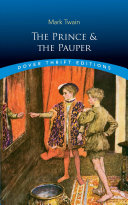
The Prince and the Pauper
The Prince and the Pauper by Mark Twain (1881)
Young Prince Edward VI and pauper Tom Canty, identical in appearance, swap places — the prince discovers the cruelty of poverty while the pauper struggles with the burden of power. Twain's first historical novel.
Historical Significance:
Set in 1547 England, The Prince and the Pauper was Twain's attempt to prove he could write "serious" literature beyond his humor. Published in 1881, it was his first novel set in England and his first attempt at historical fiction. The "switched identities" plot device, while not invented by Twain, was perfected here and has been imitated in hundreds of subsequent works from Disney's The Parent Trap to countless films. Twain's daughter Susy called it his best book. The novel's exploration of how circumstance shapes identity remains powerful.
This public domain classic was originally published in 1881. Free to read and share.
Free

eBook
FREE
Little Lord Fauntleroy
Little Lord Fauntleroy by Frances Hodgson Burnett (1886)
A poor American boy discovers he is heir to an English earldom. His innocent goodness transforms his crusty grandfather and everyone he meets. The novel that made Burnett famous and launched a fashion craze.
Historical Significance:
Serialized in St. Nicholas Magazine in 1885-86, Little Lord Fauntleroy was the bestselling children's novel of the decade and one of the bestselling books of the entire 19th century. It sparked the "Fauntleroy suit" fashion craze — velvet suits with lace collars that mothers forced on reluctant boys for a generation. The novel made Burnett wealthy and internationally famous. It was adapted into a hit play and three films. While its sentimentality fell out of fashion in the 20th century, it remains a fascinating artifact of Victorian idealism and the belief that a child's innocence could redeem the world.
This public domain classic was originally published in 1886. Free to read and share.
Free

eBook
FREE
Rebecca of Sunnybrook Farm
Rebecca of Sunnybrook Farm by Kate Douglas Wiggin (1903)
Spirited, imaginative Rebecca Rowena Randall is sent to live with her stern aunts and transforms their lives — and an entire town — with her irrepressible optimism and creativity. A forerunner to Anne of Green Gables.
Historical Significance:
Published in 1903, five years before Anne of Green Gables, Rebecca was the bestselling children's novel of its era. Kate Douglas Wiggin was already famous as a kindergarten pioneer — she established the first free kindergarten on the West Coast in 1878. Jack London called Rebecca "one of the very best characters in American fiction." Shirley Temple's 1938 film adaptation was a box office hit. The novel influenced L.M. Montgomery, who acknowledged that Anne Shirley owed a debt to Rebecca Randall.
This public domain classic was originally published in 1903. Free to read and share.
Free

eBook
FREE
Andersen's Fairy Tales
Andersen's Fairy Tales by Hans Christian Andersen
Eighteen stories, including The Emperor's New Clothes, The Snow Queen, The Little Match Girl, The Red Shoes, The Fir Tree and The Shadow.
The selection also contains The Swineherd, The Real Princess, The Shoes of Fortune, The Leap-Frog, The Elderbush, The Bell, The Old House, The Happy Family, The Story of a Mother, The False Collar, The Dream of Little Tuk and The Naughty Boy.
This edition does not include The Ugly Duckling, The Little Mermaid or Thumbelina.
Retained English text source: Project Gutenberg ebook 1597.
Free

eBook
FREE
Grimm's Fairy Tales
Grimm's Fairy Tales by Jacob and Wilhelm Grimm
A selection of 62 tales in English, based on translations by Edgar Taylor and Marian Edwardes. This edition includes Rapunzel, Hansel and Gretel, Rumpelstiltskin, Little Red-Cap, Briar Rose, Ashputtel and many other stories.
This is a selected collection, not the complete collection of more than 200 Grimm tales. Some familiar stories appear under older English titles: Ashputtel is Cinderella, Briar Rose is Sleeping Beauty, and Snowdrop is Snow White.
Retained text source: Project Gutenberg ebook 2591.
Free

eBook
FREE
Black Beauty
Black Beauty by Anna Sewell (1877)
The autobiography of a horse. From a happy colt in an English meadow through years of varying treatment — kindness and cruelty, wealth and poverty — Black Beauty's story changed how the world treats animals.
Historical Significance:
Anna Sewell wrote Black Beauty as her first and only novel while bedridden with a debilitating illness. She dictated portions to her mother, completing it in 1877. She sold it to the publisher Jarrolds for £20 and died five months after publication, never knowing that her book would become one of the bestselling novels of all time (over 50 million copies).
The novel was written specifically to promote the humane treatment of horses. It directly influenced the abolition of the bearing rein (a device that forced horses' heads into uncomfortable positions) and supported the growing animal welfare movement. The RSPCA and American Humane Association used it as advocacy literature. It is credited as the book that changed humanity's relationship with animals.
This public domain classic was originally published in 1877. Free to read and share.
Free
eBook
FREE
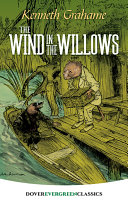
The Wind in the Willows
The Wind in the Willows by Kenneth Grahame (1908)
Mole, Ratty, Badger, and the irrepressible Toad of Toad Hall — a gentle pastoral tale of friendship, adventure, and the English countryside. One of the most cherished children's books in the English language.
Historical Significance:
Kenneth Grahame, Secretary of the Bank of England, began the stories as bedtime tales and letters for his son Alastair ("Mouse"). Published in 1908, the book received mixed reviews — critics expected something different from the author of The Golden Age. But readers loved it, and it gradually became a classic. A.A. Milne's 1929 stage adaptation, Toad of Toad Hall, introduced the story to millions. President Theodore Roosevelt wrote Grahame a fan letter saying he had "read it and reread it, and have come to accept the characters as old friends."
This public domain classic was originally published in 1908. Free to read and share.
Free
eBook
FREE
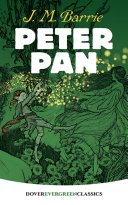
Peter Pan
Peter and Wendy (Peter Pan) by J.M. Barrie (1911)
The boy who never grows up. Peter Pan, Wendy Darling, Captain Hook, Tinker Bell, the Lost Boys, and Neverland — the ultimate fantasy of eternal childhood, tinged with melancholy and the ache of growing up.
Historical Significance:
Peter Pan first appeared in Barrie's 1902 novel The Little White Bird, then became a phenomenally successful play in 1904, before being novelized as Peter and Wendy in 1911. Barrie, a Scottish playwright haunted by the death of his older brother David at age 13 (after which his mother idealized the boy who would never grow up), created Peter Pan partly from his friendship with the Llewelyn Davies boys, whom he eventually adopted.
Barrie donated the copyright of Peter Pan to Great Ormond Street Hospital for Sick Children in London, which has earned millions in royalties for the hospital. Peter Pan is the rare literary character who belongs genuinely to the collective imagination — "All children, except one, grow up."
This public domain classic was originally published in 1911. Free to read and share.
Free

eBook
FREE
A Little Princess
A Little Princess by Frances Hodgson Burnett (1905)
Sara Crewe, a wealthy boarding school student, loses everything when her father dies penniless — yet maintains her dignity, imagination, and kindness through poverty and cruelty. A story about the true meaning of being a princess.
Historical Significance:
Originally a short story called "Sara Crewe" (1888), Burnett expanded it into a play (1902) and then this novel (1905). The story was partly autobiographical — Burnett herself experienced dramatic reversals of fortune, going from poverty to wealth to poverty again. Sara's philosophy — "Whatever comes cannot alter one thing. If I am a princess in rags and tatters, I can be a princess inside" — has inspired children for over a century. The 1995 Alfonso Cuarón film is considered one of the finest children's films ever made.
This public domain classic was originally published in 1905. Free to read and share.
Free
eBook
FREE
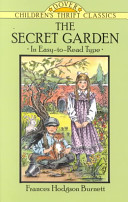
The Secret Garden
The Secret Garden by Frances Hodgson Burnett (1911)
Spoiled, unloved Mary Lennox is sent to live at her uncle's gloomy Yorkshire manor, where she discovers a hidden, neglected garden — and in nurturing it back to life, heals herself and everyone around her. One of the most beloved children's novels ever written.
Historical Significance:
Frances Hodgson Burnett, already famous for Little Lord Fauntleroy, wrote The Secret Garden while living at Great Maytham Hall in Kent, which had its own walled garden. Serialized in The American Magazine from November 1910 to August 1911, the novel was not initially considered her best work. It was only after her death in 1924 that it gradually surpassed her other books in popularity, becoming one of the most treasured children's classics of the 20th century.
The novel's themes of healing through nature, the power of positive thinking, and the resilience of children were ahead of their time. Modern horticultural therapy programs cite it as an early articulation of their principles.
This public domain classic was originally published in 1911. Free to read and share.
Free
eBook
FREE
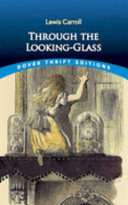
Through the Looking-Glass
Through the Looking-Glass, and What Alice Found There by Lewis Carroll (1871)
Alice steps through a mirror into a world where everything is reversed — a giant chess game where she must become a queen. Featuring Tweedledee and Tweedledum, the Jabberwocky, Humpty Dumpty, and the Red Queen's race where you must run just to stay in place.
Historical Significance:
Carroll's sequel to Alice's Adventures in Wonderland was published in December 1871, again illustrated by John Tenniel. While the first Alice book was pure nonsense, Looking-Glass has a more structured plot — based on an actual chess game that can be played out on a board. Carroll, a mathematics lecturer at Oxford, embedded logical puzzles and wordplay that continue to delight mathematicians.
The Jabberwocky poem ("'Twas brillig, and the slithy toves") is the most famous nonsense poem in English. Humpty Dumpty's declaration that "When I use a word, it means just what I choose it to mean" has been cited in Supreme Court decisions and philosophy papers. The Red Queen's hypothesis in evolutionary biology takes its name from this book.
This public domain classic was originally published in 1871. Free to read and share.
Free
eBook
FREE
Anne of Green Gables
Anne of Green Gables by L.M. Montgomery (1908)
The irrepressible, imaginative, red-haired orphan Anne Shirley arrives at Green Gables on Prince Edward Island and transforms every life she touches. One of the most beloved characters in children's literature.
Historical Significance:
Lucy Maud Montgomery drew on her own childhood in Cavendish, Prince Edward Island, to create Anne's world. She began writing the novel in 1905 after finding a notebook entry about "a couple who applied to an orphan asylum for a boy. By mistake a girl was sent them." The manuscript was rejected by five publishers before L.C. Page & Company of Boston accepted it.
Published in June 1908, Anne of Green Gables was an immediate bestseller. Mark Twain called Anne "the dearest child of fiction since the immortal Alice." Montgomery went on to write seven more Anne books, following the character from childhood through marriage and motherhood.
Montgomery's own life was far less idyllic than Anne's. She was raised by strict grandparents after her mother's death, endured a difficult marriage to a minister suffering from depression, and struggled with her own mental health while maintaining the public persona of a cheerful author.
Cultural Impact:
Anne of Green Gables has sold over 50 million copies and been translated into 36 languages. It is a cultural phenomenon in Japan, where it has been beloved since a 1952 translation — Japanese tourists make up a significant portion of visitors to Prince Edward Island. The 1985 CBC television film and Netflix's Anne with an E brought the character to new generations. Anne Shirley remains a powerful symbol of female independence, imagination, and resilience.
This public domain classic was originally published in 1908. Free to read and share.
Free

eBook
FREE
The Jungle Book
The Jungle Book by Rudyard Kipling (1894)
Mowgli, Baloo, Bagheera, Shere Khan, and Kaa — the timeless stories of a boy raised by wolves in the jungles of India, learning the Law of the Jungle and finding his place between two worlds.
Historical Significance:
Rudyard Kipling wrote The Jungle Book in 1893-1894 while living in Brattleboro, Vermont, with his American wife Carrie. He was already the most famous writer in the English-speaking world, and these stories cemented his reputation as a master storyteller.
Born in Bombay (now Mumbai) in 1865, Kipling spent his early childhood in India before being sent to England for education — an experience of abandonment and cruelty he never forgot. The Jungle Book reflects his deep love for India and his understanding of the complex relationship between civilization and nature.
The Mowgli stories are set in the Seoni hills of central India, and Kipling researched Indian wildlife extensively, consulting Robert Armitage Sterndale's "Natural History of the Mammalia of India." The non-Mowgli stories ("Rikki-Tikki-Tavi," "Toomai of the Elephants," "The White Seal") are equally beloved.
In 1907, Kipling became the first English-language writer to receive the Nobel Prize in Literature.
Cultural Impact:
Disney's animated adaptation (1967) with its beloved songs became one of the most popular animated films ever made. The 2016 live-action/CGI remake grossed nearly $1 billion worldwide. The Cub Scouts movement adopted Jungle Book terminology (Akela, den, pack). Kipling's "Law of the Jungle" — "the strength of the pack is the wolf, and the strength of the wolf is the pack" — is quoted in contexts from business to military.
This public domain classic was originally published in 1894. Free to read and share.
Free
No classics match your filters.