New eBooks
0 booksNo eBooks Yet
Be the first to publish an eBook on BoingyBooks!
🎓 Your Free Digital Library Awaits
Access 232+ classic ebooks — from Shakespeare to Sherlock Holmes. Read on any device, save your progress, build your library.
Create Free Account →Classic Literature
142 free classicsTimeless works from the public domain, beautifully formatted for the BoingyBooks reader.

eBook
FREE
The Waste Land
The Waste Land by T.S. Eliot (1922)
"April is the cruelest month." The most important poem of the 20th century — a fragmented, allusive, devastating portrait of post-World War I civilization in ruins. 434 lines that changed literature forever.
Historical Significance:
T.S. Eliot, a 33-year-old American expatriate working as a bank clerk in London, published The Waste Land in October 1922 — the same year as Joyce's Ulysses and Woolf's Jacob's Room, making 1922 the annus mirabilis of modernism. Eliot's original manuscript was twice as long; Ezra Pound edited it down with ruthless brilliance, earning Eliot's dedication: "il miglior fabbro" (the better craftsman).
The poem draws on the Grail legend, Dante, Shakespeare, the Upanishads, music hall songs, and overheard pub conversations, weaving them into a tapestry of cultural collapse. Its famous opening — "April is the cruelest month, breeding / Lilacs out of the dead land" — inverts Chaucer's joyful spring opening in The Canterbury Tales, signaling that the old literary certainties are dead.
Eliot won the Nobel Prize for Literature in 1948, with the committee specifically citing The Waste Land. The poem has generated more scholarly commentary than any other 20th-century literary work. It made difficulty itself a literary value and established the template for modernist poetry. Every subsequent poet has had to reckon with it.
This public domain classic was originally published in 1922. Free to read and share.
Free
eBook
FREE
Heidi
Heidi by Johanna Spyri (1881)
An orphan girl is sent to live with her grumpy grandfather on an Alpine mountain — and transforms his life, her own, and everyone she meets with her irresistible joy and goodness. One of the most beloved children's books ever written.
Historical Significance:
Johanna Spyri, a Swiss author, published Heidi in 1881, and it became an international phenomenon. The novel has been translated into over 50 languages and sold over 50 million copies. Heidi's love of nature, her healing influence on the paralyzed Clara, and her relationship with her initially forbidding grandfather established templates used by countless children's books since. Shirley Temple's 1937 film cemented Heidi's place in popular culture. The book is credited with helping to establish Swiss Alpine tourism — visitors come specifically seeking "Heidi's mountains." It is Switzerland's most famous cultural export after chocolate and watches.
This public domain classic was originally published in 1881. Free to read and share.
Free

eBook
FREE
The Princess and the Goblin
The Princess and the Goblin by George MacDonald (1872)
Princess Irene discovers a mysterious great-great-grandmother spinning in a tower, while miner boy Curdie uncovers a goblin plot to invade the castle from below. The fairy tale that inspired Tolkien, Lewis, and modern fantasy.
Historical Significance:
George MacDonald, a Scottish minister and author, published The Princess and the Goblin in 1872. C.S. Lewis wrote that reading MacDonald's Phantastes at age 16 "baptized my imagination" and called MacDonald "my master." Tolkien acknowledged MacDonald's influence on The Hobbit — the goblins tunneling beneath mountains are directly descended from MacDonald's goblins. G.K. Chesterton called The Princess and the Goblin "a book that has made a difference to my whole existence." Without MacDonald, there would likely be no Narnia, no Middle-earth, and no modern fantasy genre as we know it.
This public domain classic was originally published in 1872. Free to read and share.
Free
eBook
FREE
The Art of Love
Ars Amatoria (The Art of Love) by Ovid (c. 2 AD)
The ancient world's most famous guide to seduction. Ovid instructs men and women on where to find lovers, how to attract them, how to keep them, and how to manage affairs — all with wit, irony, and astonishing frankness.
Historical Significance:
Ovid published Ars Amatoria around 2 AD, and it may have contributed to his mysterious exile by Emperor Augustus in 8 AD (the official charge was "a poem and a mistake"). The poem is simultaneously a practical dating manual, a parody of didactic poetry, and a subversive attack on Augustus' moral legislation promoting marriage and childbearing. Ovid advises readers on grooming, conversation, gift-giving, and the psychology of desire with a sophistication that feels startlingly modern. The poem was banned, burned, and condemned by the Church throughout the Middle Ages — which only increased its popularity. It influenced the troubadours, Chaucer, Shakespeare, and every subsequent writer on love and seduction.
This public domain classic was originally composed c. 2 AD. Free to read and share.
Free
eBook
FREE
The Histories
The Histories by Herodotus (c. 430 BC)
"The Father of History" tells the story of the Greco-Persian Wars — Marathon, Thermopylae, Salamis — along with astonishing digressions about Egyptian pyramids, Scythian customs, Indian gold-digging ants, and flying snakes.
Historical Significance:
Herodotus of Halicarnassus wrote the first sustained narrative history in Western civilization around 430 BC. His purpose: "so that human achievements may not become forgotten in time, and great and marvelous deeds — some displayed by Greeks, some by barbarians — may not be without their glory." Unlike previous chroniclers who simply listed kings and battles, Herodotus investigated causes, interviewed witnesses, and told stories. He traveled throughout the Mediterranean and Near East gathering material. His account of the 300 Spartans at Thermopylae shaped Western civilization's ideal of heroic sacrifice. Cicero called him "the Father of History" — though some have called him "the Father of Lies" for his more fantastical claims.
This public domain classic was originally composed c. 430 BC. Free to read and share.
Free
eBook
FREE
The Age of Fable
Bulfinch's Mythology: The Age of Fable by Thomas Bulfinch (1855)
Zeus and Hera, Odysseus and Circe, Perseus and Medusa, Theseus and the Minotaur — the definitive retelling of Greek, Roman, and Norse mythology for English-speaking readers. How most of the Western world learns its myths.
Historical Significance:
Thomas Bulfinch, a Boston clerk who never married and lived modestly, wrote The Age of Fable in 1855 to make classical mythology accessible to ordinary Americans who hadn't had a classical education. He succeeded beyond all measure — "Bulfinch's Mythology" became the standard reference for generations of English-speaking readers, writers, and artists. Virtually every American and British writer who references Greek mythology learned it from Bulfinch. The book democratized knowledge that had been the exclusive property of the educated elite. It remains the most widely read mythology text in English and is still assigned in schools.
This public domain classic was originally published in 1855. Free to read and share.
Free
eBook
FREE
Robinson Crusoe
Robinson Crusoe by Daniel Defoe (1719)
Shipwrecked and alone on a deserted island for 28 years, Robinson Crusoe must build shelter, grow food, and survive — until he discovers he is not alone. The novel that invented the survival genre and is often called the first English novel.
Historical Significance:
Daniel Defoe published Robinson Crusoe on April 25, 1719, when he was nearly 60 years old. The novel was partly inspired by the real story of Alexander Selkirk, a Scottish sailor marooned on a Pacific island for four years (1704-1709). The book was an immediate and enormous success, spawning countless imitations — the genre became known as "Robinsonades." Rousseau called it "the most felicitous treatise on natural education." Marx used Crusoe as a model for economic theory. The novel invented the desert island story, the survival narrative, and arguably the realistic novel itself. It has never been out of print in over 300 years.
This public domain classic was originally published in 1719. Free to read and share.
Free
eBook
FREE
The Pilgrim's Progress
The Pilgrim's Progress from This World to That Which Is to Come by John Bunyan (1678)
Christian, burdened by sin, flees the City of Destruction for the Celestial City, encountering the Slough of Despond, Vanity Fair, Giant Despair, and the Delectable Mountains. The most widely read English book after the Bible for over 200 years.
Historical Significance:
John Bunyan, a tinker and Nonconformist preacher, wrote The Pilgrim's Progress while imprisoned in Bedford Gaol for preaching without a license. Published in 1678, it became the most popular book in the English-speaking world — read by rich and poor, educated and illiterate, in every English-speaking country. It has been translated into over 200 languages. Bunyan's allegorical place-names — Vanity Fair, the Slough of Despond, Doubting Castle — have entered the English language permanently. Thackeray named his novel after Bunyan's Vanity Fair. C.S. Lewis credited Bunyan as a major influence on The Chronicles of Narnia.
This public domain classic was originally published in 1678. Free to read and share.
Free
eBook
FREE
Don Juan
Don Juan by Lord Byron (1819-1824)
Not a seducer but a man seduced — Byron's comic masterpiece follows the hapless Juan from Spain to a harem in Constantinople, a Russian empress's bed, and the English countryside. The wittiest long poem in the English language.
Historical Significance:
Byron wrote Don Juan in ottava rima stanzas from 1818 until his death in Greece in 1824, leaving it unfinished at 16 cantos. The poem scandalized England with its sexual frankness, satirical attacks on contemporary figures, and Byron's refusal to play by literary rules. His publisher initially released it anonymously. Byron's digressive, conversational style — breaking the fourth wall constantly to address the reader — anticipated postmodern fiction by 150 years. The poem's wit is relentless: "Man's love is of man's life a thing apart, / 'Tis woman's whole existence." Byron himself called it "the most moral of poems" — and he was only half joking.
This public domain classic was originally published 1819-1824. Free to read and share.
Free
eBook
FREE
The Book of the Thousand Nights and a Night
The Arabian Nights (One Thousand and One Nights), translated by Richard F. Burton (1885)
Scheherazade saves her life by telling her murderous husband a new story every night for 1,001 nights. Aladdin, Ali Baba and the Forty Thieves, Sinbad the Sailor — the most famous story collection in the world.
Historical Significance:
The Arabian Nights originated as a collection of Middle Eastern and South Asian folk tales compiled over centuries, with roots in Persian, Arabic, Indian, and Egyptian oral traditions. Antoine Galland's 1704 French translation introduced Europe to Aladdin, Ali Baba, and Sinbad — stories that may not have been in the original Arabic manuscripts but became the most famous. Richard Burton's 1885-88 English translation was the first unexpurgated version, preserving the sexual and violent content that previous translators had censored. The tales influenced everything from Edgar Allan Poe to Jorge Luis Borges to Disney's Aladdin. Scheherazade herself — the woman who saves her life through storytelling — is the ultimate symbol of narrative's power.
This public domain classic was originally compiled over centuries and translated by Burton in 1885. Free to read and share.
Free

eBook
FREE
Beowulf
Beowulf (c. 700-1000 AD)
The oldest surviving epic poem in English. The warrior Beowulf sails to Denmark to fight the monster Grendel, then Grendel's mother, and finally — decades later — a dragon. A tale of heroism, mortality, and the passage of time.
Historical Significance:
Composed in Old English sometime between the 8th and early 11th centuries, Beowulf survives in a single manuscript (Cotton MS Vitellius A.xv) that was nearly destroyed in a fire in 1731. The poem was largely ignored until the 19th century, when scholars recognized it as a masterpiece. J.R.R. Tolkien's 1936 lecture "Beowulf: The Monsters and the Critics" transformed how the poem was understood — not as a flawed historical document but as a great work of art about the human confrontation with death. Tolkien's own Lord of the Rings is deeply influenced by Beowulf. Seamus Heaney's 1999 translation became a New York Times bestseller — an Old English poem topping modern charts.
This public domain classic was originally composed c. 700-1000 AD. Free to read and share.
Free
eBook
FREE
The Canterbury Tales
The Canterbury Tales by Geoffrey Chaucer (c. 1387-1400)
Thirty pilgrims journey from London to Canterbury Cathedral, each telling a tale to pass the time. From the bawdy Miller's Tale to the noble Knight's Tale — a panoramic portrait of medieval English society told with humor, humanity, and genius.
Historical Significance:
Chaucer began The Canterbury Tales around 1387 and worked on them until his death in 1400, leaving the collection unfinished (24 of a planned 120 tales). Written in Middle English rather than Latin or French, the Tales established English as a legitimate literary language. Chaucer drew on Boccaccio's Decameron for the frame narrative but created something uniquely English — a cross-section of 14th-century society from knight to nun to drunken cook, each speaking in their own voice. The Wife of Bath, with her frank defense of female sexuality and serial marriage, is one of literature's most vivid and modern characters — created 600 years ago. Chaucer is called the "Father of English Literature" for good reason.
This public domain classic was originally composed c. 1387-1400. Free to read and share.
Free

eBook
FREE
The Wealth of Nations
An Inquiry into the Nature and Causes of the Wealth of Nations by Adam Smith (1776)
The invisible hand, the division of labor, free markets, and the self-interest that drives economic prosperity. The book that invented modern economics and shaped the modern world.
Historical Significance:
Adam Smith, a Scottish moral philosopher, published The Wealth of Nations on March 9, 1776 — the same year as the American Declaration of Independence, and the two documents share a revolutionary spirit. Smith argued that national wealth comes not from hoarding gold (mercantilism) but from the productive labor of free individuals pursuing their own interests in competitive markets. His "invisible hand" metaphor — that individual self-interest inadvertently serves the public good — became the foundational principle of capitalism. The book influenced every subsequent economist from Ricardo to Marx to Keynes to Friedman. It remains the most important economics text ever written.
This public domain classic was originally published in 1776. Free to read and share.
Free
eBook
FREE
The Critique of Pure Reason
The Critique of Pure Reason by Immanuel Kant (1781)
The most important work of modern philosophy. Kant asks: what can we know? His answer — that the mind actively structures experience rather than passively receiving it — revolutionized every branch of human knowledge.
Historical Significance:
Immanuel Kant, a professor in Königsberg, Prussia, who famously never traveled more than 10 miles from his birthplace, published the Critique of Pure Reason in 1781 after a decade of intensive work. The book is notoriously difficult — Kant himself called it "dry, obscure, contrary to all ordinary ideas, and on top of that prolix" — but its conclusions transformed philosophy, science, and culture. Kant demonstrated that space, time, and causality are not features of the world itself but structures imposed by the human mind. This "Copernican revolution in philosophy" influenced everything from Einstein's relativity to cognitive science to postmodern theory.
This public domain classic was originally published in 1781. Free to read and share.
Free

eBook
FREE
The Essays of Montaigne
The Essays of Michel de Montaigne (1580-1592)
"Que sais-je?" — "What do I know?" Montaigne invented the essay form: short, personal, digressive explorations of everything from cannibals to kidney stones, from death to the education of children.
Historical Significance:
Michel de Montaigne, a French nobleman who retired to his château's tower library in 1571, spent the rest of his life writing Essais — literally "attempts" or "trials." Published in three volumes (1580, 1588, 1595), the Essays invented a new literary form: the personal essay, in which the author's own experience and self-observation become the primary subject. Montaigne's radical skepticism, his tolerance, his curiosity about other cultures (he was one of the first Europeans to write sympathetically about indigenous peoples), and his unflinching self-examination made him the first truly modern writer. Shakespeare read him; Emerson worshipped him; every essayist since writes in his shadow.
This public domain classic was originally published 1580-1592. Free to read and share.
Free
eBook
FREE
The Hunchback of Notre-Dame
The Hunchback of Notre-Dame by Victor Hugo (1831)
Quasimodo, the deaf, deformed bell-ringer of Notre-Dame Cathedral, loves the beautiful Romani dancer Esmeralda, who is pursued by the fanatical Archdeacon Frollo. A Gothic masterpiece set against the vivid medieval Paris of 1482.
Historical Significance:
Victor Hugo wrote Notre-Dame de Paris (its French title) partly to save the real cathedral, which was crumbling from neglect and faced demolition. Published in 1831, the novel sparked a Gothic revival and a massive restoration campaign for Notre-Dame led by architect Eugène Viollet-le-Duc. When Notre-Dame caught fire on April 15, 2019, Hugo's novel surged to #1 on Amazon within hours. Disney's 1996 animated film softened the story considerably — Hugo's original is far darker, with Esmeralda hanged and Quasimodo dying of grief beside her skeleton. The novel is Hugo's most passionate argument that architecture is civilization's greatest art.
This public domain classic was originally published in 1831. Free to read and share.
Free
eBook
FREE
Madame Bovary
Madame Bovary by Gustave Flaubert (1857)
Emma Bovary, a doctor's wife in provincial Normandy, seeks escape from her dull marriage through passionate love affairs and reckless spending — with devastating consequences. The novel that invented literary realism.
Historical Significance:
Flaubert was prosecuted for obscenity after Madame Bovary was serialized in 1856 — the trial made it a sensation. Acquitted, Flaubert became the most influential French novelist of his century. His obsession with "le mot juste" (the exact right word), his invisible narrator who refuses to judge, and his merciless dissection of bourgeois self-deception created the template for modern literary fiction. "Madame Bovary, c'est moi," Flaubert allegedly said — "Madame Bovary is me." The novel influenced Tolstoy, Henry James, Proust, and virtually every realist novelist who followed. It remains the most widely taught French novel in the world.
This public domain classic was originally published in 1857. Free to read and share.
Free
eBook
FREE
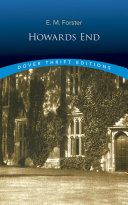
Howards End
Howards End by E.M. Forster (1910)
"Only connect!" The Schlegel sisters (intellectual, liberal) and the Wilcox family (practical, conservative) are drawn together by a country house called Howards End. Forster's meditation on class, culture, and the soul of England.
Historical Significance:
Published in 1910, Howards End was Forster's most ambitious attempt to bridge the divisions in Edwardian England — between rich and poor, head and heart, culture and commerce. The novel's epigraph, "Only connect the prose and the passion," became one of literature's most quoted injunctions. The Merchant Ivory 1992 film, starring Anthony Hopkins and Emma Thompson (who won the Oscar), was a critical and commercial triumph. The novel anticipated England's transformation from an imperial power to a modern welfare state, making it one of the most prescient novels of its era.
This public domain classic was originally published in 1910. Free to read and share.
Free

eBook
FREE
Mrs Dalloway
Mrs Dalloway by Virginia Woolf (1925)
"Mrs. Dalloway said she would buy the flowers herself." One day in the life of Clarissa Dalloway as she prepares for a party in post-war London, her consciousness flowing between past and present, joy and despair.
Historical Significance:
Published in 1925, Mrs Dalloway was Virginia Woolf's fourth novel and her first masterpiece. Using a stream-of-consciousness technique influenced by James Joyce, Woolf mapped the interior lives of her characters with unprecedented delicacy. The novel takes place on a single day in June 1923, paralleling the society hostess Clarissa with the shell-shocked war veteran Septimus Warren Smith — connected only by the striking of Big Ben. Michael Cunningham's The Hours (1998) reimagined Mrs Dalloway across three time periods, winning the Pulitzer Prize. Nicole Kidman won an Oscar playing Woolf in the 2002 film adaptation.
This public domain classic was originally published in 1925. Free to read and share.
Free

eBook
FREE
The Return of the Native
The Return of the Native by Thomas Hardy (1878)
On the brooding Egdon Heath, Clym Yeobright returns from Paris, the beautiful Eustacia Vye longs to escape, and the reddleman Diggory Venn watches over all. A tragedy of thwarted desires set against Hardy's most powerful landscape.
Historical Significance:
Published in 1878, The Return of the Native opens with one of literature's most famous descriptive chapters — "A Face on Which Time Makes but Little Impression" — establishing Egdon Heath as a dark, elemental presence that dwarfs the human dramas played out upon it. Hardy was influenced by Greek tragedy, and the novel follows a near-classical structure of inevitability and doom. Eustacia Vye — passionate, restless, modern — is one of Hardy's most compelling and sympathetic characters, trapped in a world too small for her ambitions.
This public domain classic was originally published in 1878. Free to read and share.
Free
eBook
FREE
Jude the Obscure
Jude the Obscure by Thomas Hardy (1895)
Jude Fawley, a self-taught stonemason, dreams of studying at the university of Christminster (Oxford) but is thwarted at every turn by class, convention, and his own disastrous relationships. Hardy's darkest and most controversial novel.
Historical Significance:
The critical reaction to Jude the Obscure was so savage that Hardy never wrote another novel. The Bishop of Wakefield burned his copy. Critics called it "Jude the Obscene" for its frank treatment of sexuality, marriage, and the hypocrisy of the church. Hardy was devastated and spent the remaining 33 years of his life writing poetry instead. The novel's attack on the class barriers to education, its sympathetic portrayal of divorce and free love, and the horrifying fate of the children made it genuinely shocking in 1895. Modern readers recognize it as Hardy's most powerful and prophetic work.
This public domain classic was originally published in 1895. Free to read and share.
Free
eBook
FREE
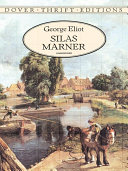
Silas Marner
Silas Marner: The Weaver of Raveloe by George Eliot (1861)
A lonely, miserly weaver, falsely accused of theft and betrayed by his best friend, withdraws from humanity — until a golden-haired orphan child appears at his hearth and redeems his life. Eliot's most compact and beloved novel.
Historical Significance:
George Eliot wrote Silas Marner in just four months in 1861, calling it a story that "thrust itself between me and the other book I was meditating." At just 70,000 words, it is her shortest and most accessible novel — a fairy tale for adults about how love and community can heal even the deepest wounds. The parallel between Silas's stolen gold and the golden-haired child who replaces it gives the novel a symbolic richness beneath its simple surface. It remains one of the most widely assigned novels in English schools.
This public domain classic was originally published in 1861. Free to read and share.
Free
eBook
FREE
The Mill on the Floss
The Mill on the Floss by George Eliot (1860)
Maggie Tulliver, passionate, intelligent, and trapped by the narrow expectations of provincial English life, struggles between duty to her family and her own desires. Eliot's most autobiographical and emotionally powerful novel.
Historical Significance:
Published in 1860, The Mill on the Floss drew heavily on George Eliot's (Mary Ann Evans') own childhood in rural Warwickshire and her painful estrangement from her brother Isaac after she began living with the married George Henry Lewes. Maggie Tulliver's hunger for knowledge in a world that sees education as wasted on women, and her tormented relationship with her beloved brother Tom, mirror Eliot's own experiences. The novel's devastating flood ending remains one of the most debated conclusions in English fiction.
This public domain classic was originally published in 1860. Free to read and share.
Free
eBook
FREE
Vanity Fair
Vanity Fair: A Novel Without a Hero by William Makepeace Thackeray (1848)
The contrasting fortunes of sweet, passive Amelia Sedley and brilliant, ruthless Becky Sharp as they navigate Regency-era English society. Thackeray's satirical masterpiece — "a novel without a hero" because everyone is flawed.
Historical Significance:
Serialized in 20 monthly parts from January 1847 to July 1848, Vanity Fair was Thackeray's bid to rival Dickens as England's greatest novelist. Where Dickens created lovable heroes and hissable villains, Thackeray created morally ambiguous characters in a corrupt world. Becky Sharp — witty, amoral, irresistibly charming — is one of literature's great anti-heroines. The title comes from John Bunyan's Pilgrim's Progress, where Vanity Fair is a marketplace of worldly temptations. The novel has been adapted numerous times, including a 2004 film starring Reese Witherspoon.
This public domain classic was originally published in 1848. Free to read and share.
Free
No classics match your filters.