New eBooks
0 booksNo eBooks Yet
Be the first to publish an eBook on BoingyBooks!
🎓 Your Free Digital Library Awaits
Access 232+ classic ebooks — from Shakespeare to Sherlock Holmes. Read on any device, save your progress, build your library.
Create Free Account →Classic Literature
155 free classicsTimeless works from the public domain, beautifully formatted for the BoingyBooks reader.
eBook
FREE
The Phantom Rickshaw and Other Tales
The Phantom Rickshaw and Other Tales by Rudyard Kipling (1888)
Ghost stories set in British India — a dead woman's spectral rickshaw haunts her faithless lover through the streets of Simla, a man is driven mad by his doppelgänger, and a child builds a terrifying "city of the dead." Kipling's early masterpieces of supernatural horror.
Historical Significance:
Kipling published these stories in 1888 when he was just 22 years old, working as a journalist in Lahore and Allahabad. "The Phantom Rickshaw" is considered one of the finest ghost stories in English — the lover who cannot escape his dead mistress's accusing presence even in broad daylight on a crowded street. "The Strange Ride of Morrowbie Jukes" — about a man trapped in a colony of the living dead — prefigures Kafka and the Theater of the Absurd. These early Indian stories show Kipling at his most psychologically complex, before the imperial confidence of his later work. They demonstrate that the master of adventure fiction was equally a master of horror.
This public domain classic was originally published in 1888. Free to read and share.
Free
eBook
FREE
Herland
Herland by Charlotte Perkins Gilman (1915)
Three male explorers discover a hidden country inhabited entirely by women who reproduce through parthenogenesis. The men's assumptions about gender are systematically demolished. A feminist utopia by the author of "The Yellow Wallpaper."
Historical Significance:
Charlotte Perkins Gilman serialized Herland in her own magazine, The Forerunner, in 1915. It was not published as a book until 1979, when feminist scholars rediscovered it. The novel uses the "lost world" adventure format to expose the absurdity of patriarchal assumptions: the male explorers expect the women to be helpless, irrational, and in need of male guidance, and are baffled when they find an advanced, peaceful, ecologically sustainable civilization that functions perfectly without men. Gilman's satire is sharp but good-humored — the men are not villains but products of their conditioning. The novel anticipates contemporary discussions about gender essentialism, reproductive rights, and environmental sustainability by a century.
This public domain classic was originally published in 1915. Free to read and share.
Free

eBook
FREE
An Occurrence at Owl Creek Bridge
An Occurrence at Owl Creek Bridge by Ambrose Bierce
A man awaits execution on a bridge during the American Civil War. The story follows his perceptions as the moment approaches.
This edition contains the complete single short story An Occurrence at Owl Creek Bridge. It is not a collection of Bierce's stories and does not include Chickamauga or The Eyes of the Panther.
Retained text source: Project Gutenberg ebook 375.
Free
eBook
FREE
The Narrative of Arthur Gordon Pym of Nantucket
The Narrative of Arthur Gordon Pym of Nantucket by Edgar Allan Poe (1838)
Poe's only complete novel. A young man stows away on a whaling ship and encounters mutiny, shipwreck, cannibalism, and increasingly bizarre discoveries as the voyage presses deeper into the Antarctic — culminating in one of literature's most mysterious and debated endings.
Historical Significance:
Published in 1838, Arthur Gordon Pym was Poe's attempt to write a longer work that would bring him the financial success his short stories had not. The novel failed commercially, and Poe dismissed it as "a very silly book." But its influence has been extraordinary: Jules Verne wrote a sequel (An Antarctic Mystery, 1897), Herman Melville drew on it for Moby-Dick, H.P. Lovecraft incorporated its Antarctic imagery into At the Mountains of Madness, and Jorge Luis Borges was obsessed with its enigmatic final pages. The novel's abrupt, hallucinatory ending — a vast white figure rises from the Antarctic sea — has generated 180 years of interpretation and remains one of literature's great unsolved mysteries.
This public domain classic was originally published in 1838. Free to read and share.
Free
eBook
FREE
The Last Man
The Last Man by Mary Shelley (1826)
A devastating plague sweeps across the world in the late 21st century, reducing humanity to a single survivor who wanders the empty ruins of civilization. The first apocalyptic novel — by the author of Frankenstein.
Historical Significance:
Mary Shelley published The Last Man in 1826, eight years after Frankenstein and four years after her husband Percy Bysshe Shelley's death by drowning. The novel is deeply personal — its characters are thinly veiled portraits of Percy Shelley, Lord Byron, and their circle, and the plague that destroys the world mirrors the deaths that devastated Mary's own life (she lost her husband, three of her four children, and several close friends in quick succession).
The novel was savaged by critics and largely forgotten for 150 years. Its rediscovery in the 1960s revealed it as astonishingly prophetic — the first novel to imagine a global pandemic destroying civilization, predating every subsequent apocalyptic narrative from The Stand to The Road to Station Eleven. It is now recognized as Mary Shelley's second masterpiece and the founding text of apocalyptic fiction.
This public domain classic was originally published in 1826. Free to read and share.
Free
eBook
FREE
The Great God Pan
The Great God Pan by Arthur Machen (1894)
A scientist performs brain surgery on a young woman to allow her to "see" the god Pan — the primal force behind reality. The experiment unleashes something terrible into Victorian London. Stephen King called it "maybe the best horror story in the English language."
Historical Significance:
Arthur Machen, a Welsh journalist and mystic, published The Great God Pan in 1894 to mixed reviews — one critic called it "an incoherent nightmare of sex and the supernatural." But the novella's influence on horror fiction has been immeasurable. H.P. Lovecraft cited Machen as a primary inspiration for his cosmic horror — the idea that reality conceals something ancient, vast, and terrifying. The story's structure — told through fragments, documents, and multiple perspectives — anticipated Lovecraft's technique. Guillermo del Toro has called Machen one of his favorite authors. The novella experienced a major revival after Stephen King's endorsement and is now recognized as a foundational text of modern horror.
This public domain classic was originally published in 1894. Free to read and share.
Free

eBook
FREE
The Water-Babies
The Water-Babies, A Fairy Tale for a Land Baby by Charles Kingsley (1863)
Tom, a young chimney sweep, drowns and is transformed into a water-baby — a tiny aquatic creature who embarks on a journey of moral education through rivers and seas. A strange, beautiful, and deeply Victorian fairy tale.
Historical Significance:
Charles Kingsley, an Anglican clergyman and friend of Charles Darwin, wrote The Water-Babies partly as a protest against child labor — chimney sweeps were among the most exploited children in Victorian England. Published in 1863, the novel blends fantasy, natural science, moral instruction, and social criticism in a way that is entirely unique. Kingsley incorporated Darwin's theory of evolution (published just four years earlier) into a fairy tale, making it one of the first works of fiction to engage with evolutionary ideas. The novel helped inspire the Chimney Sweepers Regulation Act of 1864.
This public domain classic was originally published in 1863. Free to read and share.
Free
eBook
FREE
Five Children and It
Five Children and It by E. Nesbit (1902)
Five siblings discover a Psammead — a grumpy, ancient sand-fairy — who grants them one wish per day. Each wish goes hilariously and catastrophically wrong. The book that invented modern children's fantasy.
Historical Significance:
Edith Nesbit published Five Children and It in 1902, and it changed children's literature forever. Before Nesbit, children's fantasy was either moralistic or set in entirely separate magical worlds. Nesbit was the first to place ordinary, recognizable children in a realistic modern setting and then introduce magic — the template that J.K. Rowling, Diana Wynne Jones, and virtually every subsequent children's fantasy author would follow. C.S. Lewis and Edward Eager both acknowledged her as a direct influence. The Psammead — irritable, powerful, and hilariously put-upon — is one of children's literature's most original and beloved magical creatures.
This public domain classic was originally published in 1902. Free to read and share.
Free

eBook
FREE
A Portrait of the Artist as a Young Man
A Portrait of the Artist as a Young Man by James Joyce (1916)
Stephen Dedalus grows from infancy through a Jesuit education to his declaration of artistic independence: "I will not serve." Joyce's autobiographical novel about the birth of an artist's consciousness.
Historical Significance:
Joyce serialized Portrait in the magazine The Egoist from 1914 to 1915, with the book published in 1916. It is the bridge between the realism of Dubliners and the revolutionary experimentation of Ulysses. Joyce's technique evolves with Stephen's consciousness — the opening pages mimic a baby's language, the middle sections capture a schoolboy's world, and the final pages soar with the poetic prose of a young man discovering his vocation. The novel's famous epiphany on the beach — Stephen's vision of a girl wading that transforms into a vision of artistic destiny — is one of the most celebrated passages in modernist literature. "Welcome, O life! I go to encounter for the millionth time the reality of experience and to forge in the smithy of my soul the uncreated conscience of my race."
This public domain classic was originally published in 1916. Free to read and share.
Free
eBook
FREE
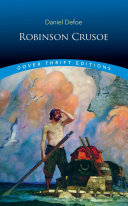
Robinson Crusoe
Robinson Crusoe by Daniel Defoe (1719)
Shipwrecked and alone on a deserted island for 28 years, Robinson Crusoe must build shelter, grow food, and survive — until he discovers he is not alone. The novel that invented the survival genre and is often called the first English novel.
Historical Significance:
Daniel Defoe published Robinson Crusoe on April 25, 1719, when he was nearly 60 years old. The novel was partly inspired by the real story of Alexander Selkirk, a Scottish sailor marooned on a Pacific island for four years (1704-1709). The book was an immediate and enormous success, spawning countless imitations — the genre became known as "Robinsonades." Rousseau called it "the most felicitous treatise on natural education." Marx used Crusoe as a model for economic theory. The novel invented the desert island story, the survival narrative, and arguably the realistic novel itself. It has never been out of print in over 300 years.
This public domain classic was originally published in 1719. Free to read and share.
Free
eBook
FREE
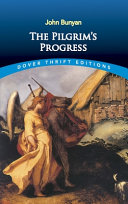
The Pilgrim's Progress
The Pilgrim's Progress from This World to That Which Is to Come by John Bunyan (1678)
Christian, burdened by sin, flees the City of Destruction for the Celestial City, encountering the Slough of Despond, Vanity Fair, Giant Despair, and the Delectable Mountains. The most widely read English book after the Bible for over 200 years.
Historical Significance:
John Bunyan, a tinker and Nonconformist preacher, wrote The Pilgrim's Progress while imprisoned in Bedford Gaol for preaching without a license. Published in 1678, it became the most popular book in the English-speaking world — read by rich and poor, educated and illiterate, in every English-speaking country. It has been translated into over 200 languages. Bunyan's allegorical place-names — Vanity Fair, the Slough of Despond, Doubting Castle — have entered the English language permanently. Thackeray named his novel after Bunyan's Vanity Fair. C.S. Lewis credited Bunyan as a major influence on The Chronicles of Narnia.
This public domain classic was originally published in 1678. Free to read and share.
Free
eBook
FREE
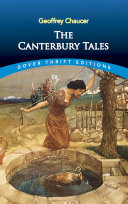
The Canterbury Tales
The Canterbury Tales by Geoffrey Chaucer (c. 1387-1400)
Thirty pilgrims journey from London to Canterbury Cathedral, each telling a tale to pass the time. From the bawdy Miller's Tale to the noble Knight's Tale — a panoramic portrait of medieval English society told with humor, humanity, and genius.
Historical Significance:
Chaucer began The Canterbury Tales around 1387 and worked on them until his death in 1400, leaving the collection unfinished (24 of a planned 120 tales). Written in Middle English rather than Latin or French, the Tales established English as a legitimate literary language. Chaucer drew on Boccaccio's Decameron for the frame narrative but created something uniquely English — a cross-section of 14th-century society from knight to nun to drunken cook, each speaking in their own voice. The Wife of Bath, with her frank defense of female sexuality and serial marriage, is one of literature's most vivid and modern characters — created 600 years ago. Chaucer is called the "Father of English Literature" for good reason.
This public domain classic was originally composed c. 1387-1400. Free to read and share.
Free

eBook
FREE
The Autobiography of an Ex-Colored Man
The Autobiography of an Ex-Colored Man by James Weldon Johnson (1912)
A light-skinned man of mixed race navigates both Black and white worlds in turn-of-the-century America, ultimately choosing to "pass" as white — and living with the consequences of that choice. A groundbreaking novel of racial identity.
Historical Significance:
James Weldon Johnson — diplomat, songwriter ("Lift Every Voice and Sing," known as the Black national anthem), and NAACP executive secretary — published this novel anonymously in 1912, and many readers believed it was a true autobiography. The unnamed narrator's journey through ragtime clubs, European concert halls, lynching violence, and the decision to abandon his Black identity for the safety of whiteness was unprecedented in American fiction. The novel anticipated the Harlem Renaissance by a decade and explored questions of racial passing, cultural authenticity, and double consciousness that remain central to American life. It was republished under Johnson's name in 1927 to wide acclaim.
This public domain classic was originally published in 1912. Free to read and share.
Free
eBook
FREE
The Red and the Black
The Red and the Black by Stendhal (1830)
Julien Sorel, a brilliant, ambitious carpenter's son in Restoration France, uses seduction and hypocrisy to climb the social ladder — until his passions destroy him. The first great psychological novel of the 19th century.
Historical Significance:
Stendhal (Henri Beyle) published Le Rouge et le Noir in 1830, based on a real criminal case. The novel was ahead of its time — it sold poorly and was largely ignored until the 1880s, when critics recognized it as a masterpiece. Stendhal wrote on his manuscript: "To the Happy Few," acknowledging that his audience would be small but discerning. The "red" and "black" of the title have been interpreted as representing the army and the church, passion and ambition, revolution and reaction. Julien Sorel — intelligent, ruthless, and ultimately self-destructive — is the prototype for every ambitious anti-hero in modern fiction, from Gatsby to Ripley.
This public domain classic was originally published in 1830. Free to read and share.
Free

eBook
FREE
Nana (French edition)
Nana by Émile Zola
Language: French
This edition contains the original French text of Zola's novel, not an English translation. Nana, an actress and courtesan in Paris, becomes entangled with the wealthy society around her. The novel forms part of Zola's Rougon-Macquart cycle.
Retained French text source: Project Gutenberg ebook 5250.
Free

eBook
FREE
The Hunchback of Notre-Dame
The Hunchback of Notre-Dame by Victor Hugo (1831)
Quasimodo, the deaf, deformed bell-ringer of Notre-Dame Cathedral, loves the beautiful Romani dancer Esmeralda, who is pursued by the fanatical Archdeacon Frollo. A Gothic masterpiece set against the vivid medieval Paris of 1482.
Historical Significance:
Victor Hugo wrote Notre-Dame de Paris (its French title) partly to save the real cathedral, which was crumbling from neglect and faced demolition. Published in 1831, the novel sparked a Gothic revival and a massive restoration campaign for Notre-Dame led by architect Eugène Viollet-le-Duc. When Notre-Dame caught fire on April 15, 2019, Hugo's novel surged to #1 on Amazon within hours. Disney's 1996 animated film softened the story considerably — Hugo's original is far darker, with Esmeralda hanged and Quasimodo dying of grief beside her skeleton. The novel is Hugo's most passionate argument that architecture is civilization's greatest art.
This public domain classic was originally published in 1831. Free to read and share.
Free
eBook
FREE
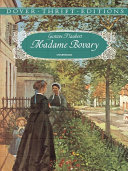
Madame Bovary
Madame Bovary by Gustave Flaubert (1857)
Emma Bovary, a doctor's wife in provincial Normandy, seeks escape from her dull marriage through passionate love affairs and reckless spending — with devastating consequences. The novel that invented literary realism.
Historical Significance:
Flaubert was prosecuted for obscenity after Madame Bovary was serialized in 1856 — the trial made it a sensation. Acquitted, Flaubert became the most influential French novelist of his century. His obsession with "le mot juste" (the exact right word), his invisible narrator who refuses to judge, and his merciless dissection of bourgeois self-deception created the template for modern literary fiction. "Madame Bovary, c'est moi," Flaubert allegedly said — "Madame Bovary is me." The novel influenced Tolstoy, Henry James, Proust, and virtually every realist novelist who followed. It remains the most widely taught French novel in the world.
This public domain classic was originally published in 1857. Free to read and share.
Free

eBook
FREE
Resurrection
Resurrection by Leo Tolstoy (1899)
Prince Nekhlyudov, serving on a jury, recognizes the accused prostitute as a woman he seduced and abandoned years ago. Consumed by guilt, he follows her through the Russian prison system, seeking to make amends. Tolstoy's last major novel.
Historical Significance:
Tolstoy wrote Resurrection at age 71, donating all proceeds to the Doukhobors, a persecuted Russian religious sect he was helping emigrate to Canada. Published in 1899, it is his most overtly political novel — a savage indictment of the Russian legal system, the Orthodox Church, and the aristocratic class to which Tolstoy himself belonged. The novel led to his excommunication from the Russian Orthodox Church in 1901. It was Tolstoy's final fictional statement of his radical Christian philosophy: that all institutions are corrupt and only personal moral transformation can save humanity.
This public domain classic was originally published in 1899. Free to read and share.
Free
eBook
FREE
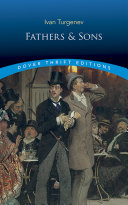
Fathers and Sons
Fathers and Sons by Ivan Turgenev (1862)
Bazarov, a young nihilist who rejects all authority, tradition, and sentiment, clashes with the older generation — until love makes a mockery of his philosophy. The novel that introduced the word "nihilism" to the world.
Historical Significance:
Published in 1862, Fathers and Sons captured the generational conflict tearing Russian society apart in the 1860s. Turgenev coined the term "nihilist" to describe Bazarov's rejection of all established values — and the word immediately entered every European language. Both radicals and conservatives attacked the novel: radicals felt Bazarov was a caricature, conservatives felt he was glorified. Turgenev, devastated by the backlash, spent most of his remaining years in Western Europe. The novel's exploration of how each generation rebels against its parents, only to be betrayed by its own contradictions, remains timeless.
This public domain classic was originally published in 1862. Free to read and share.
Free
eBook
FREE
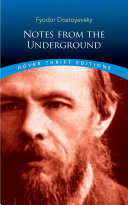
Notes from Underground
Notes from Underground by Fyodor Dostoyevsky (1864)
"I am a sick man... I am a spiteful man." The anguished, paradoxical confessions of a retired civil servant — bitter, self-aware, and unable to change. The first existentialist novel and the birth of the modern anti-hero.
Historical Significance:
Published in 1864, Notes from Underground is the hinge between classical and modern literature. Its unnamed narrator — contradictory, self-loathing, paralyzed by consciousness — was something entirely new in fiction. He rejects the optimistic rationalism of his era, arguing that humans are inherently irrational and will deliberately act against their own interests just to assert their freedom. The novella directly influenced Nietzsche, Kafka, Camus, and Sartre. Walter Kaufmann called it "the best overture for existentialism ever written." Every unreliable narrator, every alienated anti-hero in modern fiction descends from the Underground Man.
This public domain classic was originally published in 1864. Free to read and share.
Free
eBook
FREE
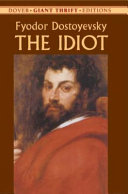
The Idiot
The Idiot by Fyodor Dostoyevsky (1869)
Prince Myshkin, a genuinely good man — innocent, compassionate, and epileptic — returns to Russia from a Swiss sanatorium and is destroyed by a society that cannot comprehend or tolerate his goodness.
Historical Significance:
Dostoyevsky set himself an impossible challenge with The Idiot: "to portray a perfectly beautiful man." He modeled Myshkin partly on Christ and partly on Don Quixote — a pure soul in a corrupt world. Published serially in 1868-69, the novel explores whether genuine goodness is sustainable in human society. Dostoyevsky's answer is devastating: Myshkin's compassion for everyone ultimately helps no one and destroys himself. Akira Kurosawa's 1951 film adaptation transposed the story to post-war Japan. The novel remains Dostoyevsky's most debated work — simultaneously his most heartfelt and most troubling.
This public domain classic was originally published in 1869. Free to read and share.
Free
eBook
FREE
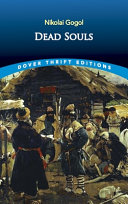
Dead Souls
Dead Souls by Nikolai Gogol (1842)
Chichikov, a charming con man, travels through provincial Russia buying "dead souls" — serfs who have died but still appear on the census rolls — as collateral for a fraudulent mortgage scheme. Russia's greatest satirical novel.
Historical Significance:
Gogol published Part One of Dead Souls in 1842, intending a three-part work modeled on Dante's Divine Comedy: Part One as Inferno (Russia's corruption), Part Two as Purgatorio (moral awakening), and Part Three as Paradiso (redemption). He burned the manuscript of Part Two shortly before his death in 1852, believing it was not worthy. Part One alone — a panorama of provincial Russian absurdity — is considered a masterpiece. Every character Chichikov meets embodies a different human vice: miserliness, gluttony, sentimentality, brutality. Nabokov called it "the greatest Russian novel." It influenced Dostoyevsky, Bulgakov, and every subsequent Russian satirist.
This public domain classic was originally published in 1842. Free to read and share.
Free
eBook
FREE
The White Company
The White Company by Arthur Conan Doyle (1891)
A young Saxon monk leaves his abbey and joins Sir Nigel Loring's "White Company" of English longbowmen during the Hundred Years' War. Doyle's personal favorite among all his books — the novel he wished to be remembered for instead of Sherlock Holmes.
Historical Significance:
Arthur Conan Doyle considered The White Company his best work and was perpetually frustrated that the public preferred Sherlock Holmes. Published in 1891, the novel is a meticulously researched historical romance set in 1366, during Edward III's wars in France and Spain. Doyle's depiction of medieval warfare, archery, and chivalry drew on extensive primary source research. The novel was hugely popular in its time and remains one of the finest historical adventure novels in English. Doyle wrote a prequel, Sir Nigel (1906), which he also valued above Holmes.
This public domain classic was originally published in 1891. Free to read and share.
Free
eBook
FREE
The Return of Tarzan
The Return of Tarzan by Edgar Rice Burroughs (1913)
Tarzan, rejected by Jane, travels to Paris and North Africa as a secret agent before returning to the jungles of Africa, where he discovers the lost city of Opar and its treasure. The sequel that expanded Tarzan from a single story into an epic saga.
Historical Significance:
Serialized in 1913, The Return of Tarzan resolved the cliffhanger ending of the first novel and established the formula for the 22 Tarzan sequels that followed: Tarzan moves between civilization and wilderness, discovers lost cities, and rescues Jane from peril. The novel introduced Opar — a lost colony of Atlantis — and its high priestess La, who became a recurring character. The Tarzan franchise generated over $2 billion in total revenue through books, films, TV, and merchandise, making it one of the most commercially successful literary properties in history.
This public domain classic was originally published in 1913. Free to read and share.
Free
No classics match your filters.